Eric Berger at Ars Technica has a headline today that caught my eye: "By the end of today, NASA’s workforce will be about 10 percent smaller" - subtitled "A dark and painful day at a space agency that brings so much
light and joy to the world." As is generally the case, Berger presents
the facts in a balanced view of the situation.
For openers, he quotes a number from NASA itself that between the headquarters
its 10 field centers, the agency employs "nearly
18,000 civil servants." Then he goes on to say:
However, by the end of today, that number will have shrunk by about 10
percent since the beginning of the second Trump administration four weeks
ago. And the world's preeminent space agency may still face significant
additional cuts.
There's no update to the source article on ARS, which they often do, nor do I
see any news about this on a few of the NASA sites I visit regularly or
NASASpaceflight dot com, so I assume there were no announcements about a
layoff or Reduction In Force today. Still, all that means is that maybe
instead of "by the end of today..." it could have been "by the end of this
week."
Berger addresses what seems to be a natural question: how many people leave
NASA in a typical year, and says that number is around one thousand. He
says his sources tell him 750 people have taken the eight month severance pay
layoff, which is a sizeable chunk of that 1,000. A 10% RIF of 18,000
people, or 1800, is only slightly bigger than that 750 added to the 1000 per
year, but I don't assume those are two different groups and that there might be
sizeable overlap between the 750 the typical 1000 resignations per
year.
The culling of "probationary" employees will be more impactful. As it has
done at other federal agencies, the Trump administration is generally firing
federal employees who are in the "probationary" period of their employment,
which includes new hires within the last one or two years or long-time
employees who have moved into or been promoted into a new position. About
1,000 or slightly more employees at NASA were impacted by these cuts.
...
However, the cuts may not stop there. Two sources told Ars that directors at
the agency's field centers have been told to prepare options for a
"significant" reduction in force in the coming months. The scope of these
cuts has not been defined, and it's possible they may not even happen, given
that the White House must negotiate budgets for NASA and other agencies with
the US Congress. But this directive for further reductions in force casts
more uncertainty on an already demoralized workforce and signals that the
Trump administration would like to make further cuts.
I think all of us who have worked in industry have been through layoffs,
widespread (like in the 1980s) or just in a company that got into troubles of
their own doing. Layoffs suck. Are the cuts necessary?
It is also clear that, as within other federal agencies, there is
significant "bloat" in NASA's budget. In some areas, this is plain to see,
with the space agency having spent in excess of $3 billion a year over the
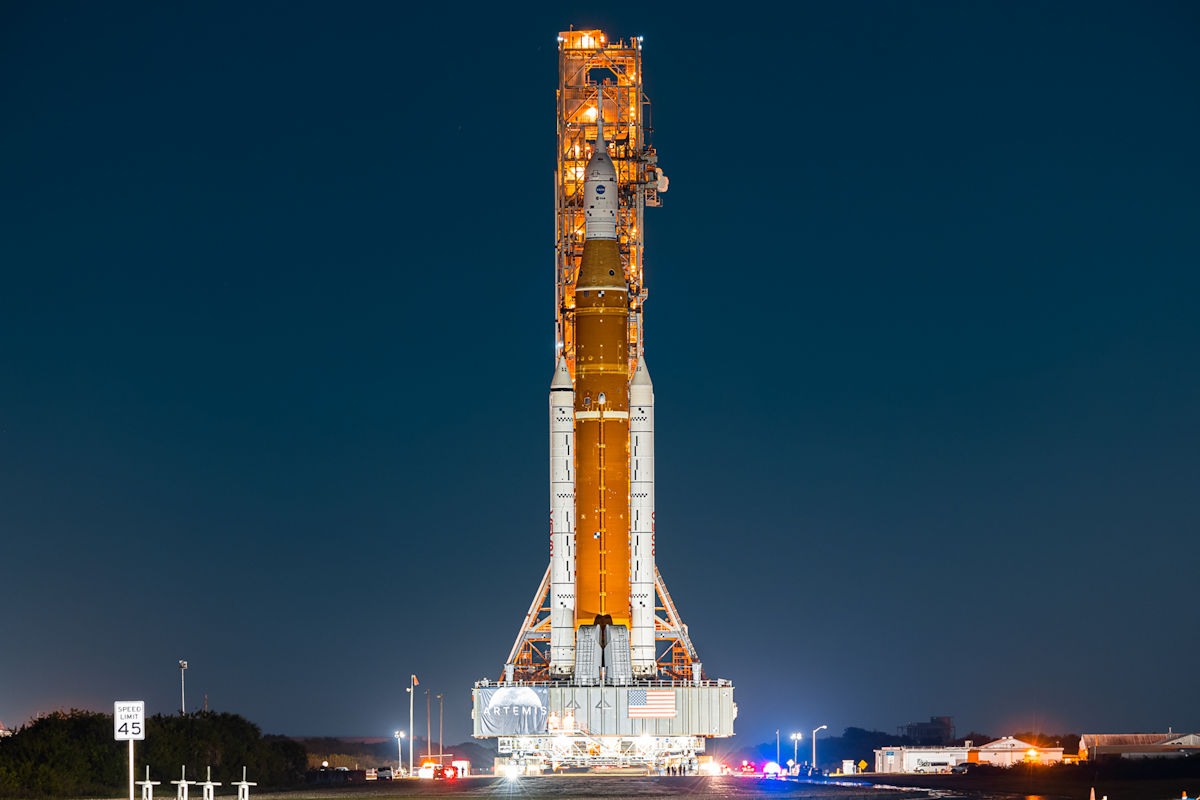
last decade "developing" a heavy lift rocket, the Space Launch System, which
used components from the Space Shuttle and costs an extraordinary amount of
money to fly. In the meantime, the private launch industry has been running
circles around NASA. Similarly, consider the Orion spacecraft. This program
is now two decades old, at a cost of $1 billion a year, and the vehicle has
never flown humans into space.
One could go on. Much of the space community has been puzzled as to why NASA
has been spending on the order of half a billion dollars to develop a Lunar
Gateway in an odd orbit around the Moon. It remains years away from
launching, and if it ever does fly, it would increase the energy needed to
reach the surface of the Moon. The reason, according to multiple sources at
the agency when the Gateway was conceived, is that the lunar space station
would offer jobs to the current flight controllers operating the
International Space Station, which is due to retire in 2030.
Part of what DOGE has been all about is looking at things that seem to only
exist to funnel money between politicians and contractors. "Create jobs" with
cost-plus contracts, like the SLS he talks about. An even worse example is the
Lunar Gateway Berger mentions. Created to keep the jobs for the current
ISS flight controllers it becomes obsolete the minute Starship's Human Landing
System version becomes operational. It’s not entirely clear, but NASA
reportedly wanted
to land just 400 lb of cargo, while the crewed Starship is probably capable of
landing tons of cargo in addition to several astronauts. Why do they need the Gateway to stage people and cargo if the HLS can carry it all?
In recent years, NASA has been in the midst of a difficult transition. The
agency deserves a lot of credit for nurturing a commercial space industry
that now is the envy of the world. But as part of this, NASA has been moving
away from owning and operating its rockets, spacecraft, and other hardware
and buying services from this commercial space industry. This transition
from traditional space to commercial space marks an important step for NASA
to remain on the cutting edge of exploration and science rather than trying
to compete with US industry.
What was a bit shocking to me - although it shouldn't have been - was reading
some of the comments. I didn't read many, maybe only a dozen out of the nearly
400 a little while ago, but the TDS and the Elon Derangement Syndrome were
stunning. The comments were either hatred of those two in particular, hatred of
"rich people" in general, pro-union or pro-communist.
The old saying about every comment taking away an IQ point sure seemed to be
applicable there.
NASA’s OSIRIS-REx spacecraft collects a sample from the asteroid Bennu. NASA's superpower is its capacity to dazzle us. Credit: NASA/Goddard/University of Arizona