Part one of this was written a few months ago, and really talked about two individuals, who were highly influential in analog electronics, and how they touched all of our lives.
Today, that one man is Steve Jobs. Let me start by saying that I am not an Apple fan-boy. I've only owned one Apple product in my life, my current iPhone 3GS. I've always regarded Apple's products as good examples of industrial design, but overpriced and hard to live with because of their closed architecture. When I first saw a Mac, I was disappointed to see its monochrome, amber display, when the PC world was going increasingly into full color displays. Windows? Point and click interfaces? I was happy with a command line. When the first generation iPod came out, I thought it was simply a re-packaged version of the 1980 Walkman, with random access because it used a hard drive instead of a cassette - handy, but hardly revolutionary. But there is no denying that Steve Jobs had a massive impact on our world.
Over the years, I've seen many stories of the development of the iconic Apple MacIntosh. You'll be excused for not remembering that the product before the Mac was the Apple Lisa, which was, to be charitable, quite forgettable. You see, the name Lisa, was officially an acronym for "Local Integrated Software Architecture", but was also the name of Steve's daughter. It's my opinion that Jobs was stung by that failure and was determined to make the Mac the greatest computer to ever hit the market. Stories go around of Jobs driving the development crew to the ends of their wits and ability to stand the pressure, throwing prototypes and destroying weeks worth of work. The often quoted line was that it had to not just be great, it had to be "insanely great".
If I had to sum up Jobs in one phrase, "insanely great" would be that phrase. I see I'm not alone, judging by today's press.
I'll let others wax about how Steve's visions of how we should interact with the digital universe shaped our world, or how their 1 year old is able to turn on an iPad, sort through the folders and start their favorite game. I will note that the most unexpected place I ever encountered a mention of Steve Jobs was in a book about the eradication of smallpox, "The Demon in the Freezer", wandering around in India in the 1970s before the birth of Apple, and then contributing money to start a medical charity, the Seva Foundation.
To re-phrase what I said last time, what's the impact of one man? The philosophers
argue that Jobs may well have changed the way people interact with computers, but if he hadn't been there, someone else would have come up with these ideas. Skeptics point out that the Mac interface really came from the Xerox Palo Alto Research Center and Apple just popularized it. But how do we know? Anyone who has done math has likely had
the experience of struggling to solve a problem, only to have it look
clear and obvious when the teacher solves it. Oftentimes, the hardest
part in solving a problem is not the mechanics of solving the problem, it's the vision to see a way that it can be solved. I am always in awe
of the impact that one determined engineer can have, and how much they can change the world for the better.
Thursday, October 6, 2011


Wednesday, October 5, 2011
Robert Kiyosaki, Gerald Celente, and Me
I'm going to go out on a limb and say you all have heard of Glen Beck's new, Internet-streamed TV channel, GBTV.com, right? The format of the online show is essentially like Glenn's Fox show, but with fewer commercials (for now) - and it's two hours long. Tonight's entire second hour was a one on one interview with Robert Kiyosaki. Robert Kiyosaki, of course, is the author of the Rich Dad, Poor Dad series of books, and the entire cottage industry that came from the books. Watch this show. I understand there's a free trial membership - I'm not sure it allows looking at "on demand " shows, but it's really worth seeing the 10/5 show.
As a celebrity known for creating wealth, Kiyosaki is widely seen on TV, and recognized for his optimistic outlook - that it's possible to obtain wealth in all markets. In this show, he comes in agreeing with Beck. To summarize, Kiyosaki believes that the chances of the dollar not collapsing are "zero", and that there's about a 20% chance that the entire world goes into a depression worse than the 1930s: total, global, economic collapse. He preaches prepping, and what he calls the "five Gs":
In a link from SurvivalBlog yesterday, Gerald Celente says in this roughly 10 minute radio interview that the ultimate collapse may occur this month. The same SuvivalBlog link points to this Yahoo! Finance article on the collapse of the European Union with the key quote, "All roads now point to a mid-November crunch." Yet another claims that Germany has started printing Deutschmarks, and shift to their historic currency would spell the end of the Euro. Angela Merkel herself has said the end of the Euro is the end of the European Union.

I titled this piece, "Robert Kiyosaki, Gerald Celente, and Me". Where do I come in? I've been saying these things as long as this blog has been here. Yeah, maybe I am crazy, but I'm in good company.
As a celebrity known for creating wealth, Kiyosaki is widely seen on TV, and recognized for his optimistic outlook - that it's possible to obtain wealth in all markets. In this show, he comes in agreeing with Beck. To summarize, Kiyosaki believes that the chances of the dollar not collapsing are "zero", and that there's about a 20% chance that the entire world goes into a depression worse than the 1930s: total, global, economic collapse. He preaches prepping, and what he calls the "five Gs":
- Grub - you need food. Lots of food. It might take years for production to return. Think preparations that would put Mormons (1 year) to shame.
- Ground - you need shelter, or someplace to go, especially if you're in a city or a place that's likely to descend into chaos.
- Gold - for barter. Silver is just as valid. So are liquor, chocolate, cigarettes, and all the other things we've talked about.
- Gas - fuel. Energy is life, whether it's for cooking or boiling rain water to drink.
- Guns - and I'm really sure I don't need to explain this one!
In a link from SurvivalBlog yesterday, Gerald Celente says in this roughly 10 minute radio interview that the ultimate collapse may occur this month. The same SuvivalBlog link points to this Yahoo! Finance article on the collapse of the European Union with the key quote, "All roads now point to a mid-November crunch." Yet another claims that Germany has started printing Deutschmarks, and shift to their historic currency would spell the end of the Euro. Angela Merkel herself has said the end of the Euro is the end of the European Union.
I titled this piece, "Robert Kiyosaki, Gerald Celente, and Me". Where do I come in? I've been saying these things as long as this blog has been here. Yeah, maybe I am crazy, but I'm in good company.
Tuesday, October 4, 2011
The Corruption is Stunning - Part III
(parts I and II) I don't go a week without being stunned by government corruption. The DOJ and the Gunwalker/Fast and Furious mess in one big example, "Holder Lied, People Died", and it's good to hear the pressure for a special prosecutor is building. But there's something going on all the time: what about pressuring General Shelton to lie about Lightsquared? What bout the FCC defying congress and the courts and implementing their net neutrality plans?
By contrast, this little story from Kerodin at III Percent Patriots is minor: no one got killed, less than half a million dollars was wasted. Judicial Watch filed Freedom of Information Act papers to determine how much was spent for Mrs. Obama's trip to South Africa this past June - $424,142. The released information contains nuggets like this:
A good mark of thoroughly dishonest person is that they lie and cheat when they don't really need to. How much would it have cost to pay for the kids and mother to go out of pocket? A couple of k-bucks to a family of millionaires?
By contrast, this little story from Kerodin at III Percent Patriots is minor: no one got killed, less than half a million dollars was wasted. Judicial Watch filed Freedom of Information Act papers to determine how much was spent for Mrs. Obama's trip to South Africa this past June - $424,142. The released information contains nuggets like this:
The passenger manifests confirm the presence of Obama’s daughter’s, Malia and Sasha on the trip. The two girls are listed as “Senior Staff.” The manifests also list Mrs. Obama’s mother, Marian Robinson, and niece and nephew, Leslie and Avery Robinson, as well Mrs. Obama’s makeup and hairstylist (Carl Ray and Johnny Wright).I never begrudge a vacation, but isn't this like the fourth one this year? What about all those Martha's Vineyard trips? Exactly what does the First Lady do that warrants such a trip? It's perfectly in character with an administration that opened with the militantly-environmentalist president setting the mid-winter temperature of the White House up to 80. Austerity is for us, not them.
A good mark of thoroughly dishonest person is that they lie and cheat when they don't really need to. How much would it have cost to pay for the kids and mother to go out of pocket? A couple of k-bucks to a family of millionaires?
Monday, October 3, 2011
Maybe I Was Too Easy on the Occupy Wall St. Idiots
It appears I may have been too easy on the motley crowd of
rent-a-protesters, anarchists, communists, and socialists who are
protesting in New York. (Wait. Anarchists and
communists? How do they protest together? One wants no
state at all and the other wants an oppressive, choking, omnipotent
state?) It's easy to dismiss a crowd complaining about
"corporatism" who camp out and surround
themselves with it. Bottled water, McDonalds coffee, Vaio
laptops and MacBooks, Skippy Peanut Butter and Nutri-Grain
bars. Oh, and be sure to donate
some vegan food for them, would ya?
The Occupy Wall Street Crowd/Days of Rage crowd is spreading to other cities around the country (Tulsa? Really?). The numbers of useful idiots are increasing because the high-fame useful idiots (Michael Moore, Susan Saranwrap, and others) are showing up and making it the place "all the cool kids hang out", especially to a generation that values fame above all else.
Look, these folks haven't been shy about what they're up to; they simply want to collapse "the system". Steven Lerner, a VP of SEIU (before "plausible deniability") was caught on tape calling for this last March. Just today, in this video, one of the self-declared organizers said, ‘This Is Revolution Not Reform’ — (and) We Are Anarchists and Revolutionaries,‘This Is the Beginning of a Revolution in This Country’. They published a rambling, barely-coherent manifesto that bounces from:
- They have held students hostage with tens of thousands of
dollars of debt on education, which is itself a human right.
- They have sold our privacy as a commodity.
And for the record, education may well be a human right, but going to college is not. You can educate yourself just fine with a library card, or better yet, your Internet connection. Where did the idea start that if you went to college you were guaranteed a high paying job right out of school? Didn't anyone tell them they need to have a marketable skill? Maybe they should think about such things before they take on that large debt, do you think?
Elsewhere, I've seen the demand for a $20 minimum wage. As long as we're pulling numbers out of our butts, why stop there? Why not $100? Why not $1000? Obviously, Fine Arts majors don't have a real fine grasp of "cause and effect".
These spoiled kids; these well-schooled but oh-so-ignorant protesters are classic examples of what Marx called "useful idiots". The society they are wishing for will crush them like they've never imagined being crushed. College students? Ask the survivors of the Cultural Revolution in China, Fidel Castro's revolution, or the killing fields of Cambodia: the intellectuals are the first ones to be exterminated.
If you haven't read Sultan Knish's take on this, it may be the best word.
Sunday, October 2, 2011
A Little Lighter Fare
The last couple of days have been long - if not bordering on too long. So a cartoon or two:
 Michael Ramirez at Townhall.com on the jobs act
 Gary Varvel, also from Townhall.com, on the battering the fourth amendment is taking. No dogs were harmed in the making of this cartoon. Unlike real life


Saturday, October 1, 2011
A Fan of Keynesians and Democrats Replies
I'm not sure how apparent this is to readers, but comments to posts older than 14 days require my approval. This is to help me know comments have been posted, because I don't typically look at posts older than a few days. Regardless of the approval, I don't censor and have only deleted two comments in the history of this blog; both were obvious spam.
I received a long set of comments to an old post (June 18, "Why A Depression is Inevitable, and Economic Collapse Inescapable"). The long comment is there on that post, but to keep from resurrecting an old post, I'm going to re-post it here in its entirety, with comments. As this was an anonymous comment, I have no idea where they came from or if they'll be back, but perhaps they would be curious about my response.
1. Should you be back, I'd like to point out that I don't believe I ever said Keynes was a socialist - (a search with that Google tool in the upper left returns no post with those two words in it) not that it matters.
2. I'm not entirely sure I've ever even said Keynesian economics is categorically wrong, although it is wrong as practiced in the world today. In this post, I said "John Maynard Keynes himself never said the government should deficit spend in good times, only as an emergency measure. " I said the same basic thing in this post and that's from just a few seconds of searching. This part, however, is laughable:
3. I don't buy that Bill Clinton was an economic conservative; a better description is pragmatist. He triangulated and found what people wanted, not really having any real principles other than love of power and attention. I don't believe we've had a real economic conservative since Warren G Harding fixed the depression of 1921. Ronald Reagan did some good things, for sure, but he cranked the deficit spending up to bankrupt the Soviet Union. It apparently did, but is now bankrupting us.
4. Numbers, and real quantitative data, please. You have a 50-50 chance of being right, but you need to give me some real, inflation-adjusted numbers. I wouldn't bother, though, it's not very relevant to the problem we're in now.
5. The problem is not Keynes, it's the way governments have implemented it in the world today. Look, we don't need to have a gold or silver standard, or the stone rings from Yap; all we need is the discipline to not debase our currency. The problem with the whole economic system, from the Federal Reserve to the tax system, is that politicians can't resist f**ing with it! Whether it's printing extra money to hand out to welfare mothers, or to go bomb Libya, it's the government that's the problem. History says whenever they go off a commodity standard, governments eventually debase their currency into worthlessness. Go read the intro to the book, "Guide to Investing in Gold and Silver", written by a partner of that radical Robert Kiyosaki (the "Rich Dad, Poor Dad" franchise). He gives example after example.
6. I'm not sure what your point is. I'm not saying supply causes demand, but aren't you saying that flooding the market with low cost money causes demand? Whatever - you're saying employers are trying to keep employees on hand, even though they're not working them to lots of overtime because demand is low; that appears to be true. Companies are "saving for a rainy day" and trying to keep people from being hurt. Shame some are trying to get that "extra" money they're holding on to.
7. But America didn't threaten to default on its debt, it simply would have had to stop borrowing more. There was plenty of money to pay the interest on the debt, which is not defaulting on the debt; the trade was to pay the interest but stop deficit borrowing. It would be a spending cap. As I said in that article you're responding to was, (in a crisis) "Anyone who has so much as run a newspaper route, or any business, or anyone even the least bit grounded in reality would say to pay your debts and not spend the money you don't have. "
8. That whole $800 billion bailout was a disgrace - we're in complete agreement. Furthermore, the $2.2 Trillion that the Bernank gave to the European banks to prop them up was even worse. The banks should have been allowed to fail - just like GM and Chrysler. There would have been widespread misery, but I believe that has just been delayed, because I believe there's no way to head off the bad times that are coming. Your point about the Financial Crisis Inquiry Commission is one I've made many times: the collapse could not have happened without the complicity of Fannie and Freddie along with the Fed. In short form, the government is the problem.
9. This is a difference without a distinction. Has QE really "... helped avert a total catastrophe - the sort that austerity would have brought"? Wanna ask the folks living in the tent cities around the country? What about the savings being wiped out by inflation? Have we had GDP growth or useless monetary inflation? (oh, the government doesn't count food in the cost of living, or inflation; isn't that special?) The treasury is printing money out the wazoo to buy our own bonds so we can deficit spend, we're creating money out of thin air and that is going to be a problem. Dude, we have a debt that's virtually 100% of GDP - how does that end well without cutting back spending? Greece is coming here. I find it interesting that you say Austrian economics isn't even worth looking at and "...their model's predictive power is non-existent" In the years coming up to 2008, I read a large number of writers who claim to be Austrian economists that predicted the 2008 crash and the one that's still coming. I believe it was 2005 or 2006 when I first read that the sub-prime mortgages were rolling up to around a quadrillion dollar leverage and was going to collapse the banking system. I didn't see a single Keynesian say it was going to happen. Maybe some did, but I haven't run across any.
Finally, you say, "And realise that if you get a bunch of austerity nuts in, balancing the budget in a recession - you will have a major depression, and people will die of starvation all over the country." See, I think the world is on the verge of dumping the US dollar as the reserve currency. China has been getting out of dollars as fast as they can (without causing a panic); not buying gold, but buying gold mines - along with copper, aluminum and everything else they might need. Opec is talking with Russia, China and Europe about no longer selling oil in dollars. Brazil, Russia, India and China are instituting the BRIC currency. The signs of the death of the dollar are everywhere. When the dollar dies because America couldn't control its spending habit - could be this year, could be next year - the "major depression and people will die of starvation all over the country" is coming here. You seem to advocate printing more money. At some point, don't you think the rest of the world is going to say those dollars are worth less because there's so many more of them, and start looking for something that holds value better?
Oh, yeah, one more thing. You'll find that my readers have zero tolerance for "proof by appeal to authority". BTW, is that you Dr. Bernanke?
I received a long set of comments to an old post (June 18, "Why A Depression is Inevitable, and Economic Collapse Inescapable"). The long comment is there on that post, but to keep from resurrecting an old post, I'm going to re-post it here in its entirety, with comments. As this was an anonymous comment, I have no idea where they came from or if they'll be back, but perhaps they would be curious about my response.
A few facts.Apparently, our friend has never visited here except for reading this. First off, he seems to think I'm a fan of Republicans and opposed to Democrats. Wrong: I'm a fan of small governments and maximum liberty and opposed to crony capitalism whether the party in power has an R or D after their name. Like many folks, I don't see a dime's worth of difference between the mainstream R and D.
1) Keynes was not a socialist. He believed capitalism was the best economic system.
2) Keynes did not advocate running a deficit. He believed that governments should, in normal times, run a surplus. It was Glen Hubbard of George W. Bush's council of economic advisors who said that "Deficits don't matter".
3) The one fiscal conservative in the USA in the last 30 years was Bill Clinton.
4)The one party with by far the greatest share of deficit spending run up under their time in power is the Republican party.
5) Keynes was also not a tax-and-spend fanatic. He believed that a government should not take more than 25% of National Income in taxation at most.
6)Business expansion is predicated on real demand. That means you only make enough of x that you believe will be demanded in the market. DO you really believe that if you made ten billion luminous pink garden gnomes that would create a market of that size by virtue of producing it? Besides, if employers were scared from employing extra people, wouldn't they just utilize the employees they have more? But no, the latest figures show that employees are not being utilized, and workforces taking weeks off from production. Why? Red tape! Bah! No, it's lack of demand out there.
7) When America threatened to default on it's debt, it was just the same as you taking a hug loan with a credit card, and refusing to pay. That is right - if you hadn't raised the debt ceiling and defaulted, you would have STOLEN OTHER PEOPLE'S MONEY. That is called theft. I'm sure you like to see a jail sentence for people who hold up a store. Well, it would have been exactly the same thing. But worse.
8) THE US (under Bush) gave the bankers on Wall Street $800 billion. Why? Because of a whole off-the-books shadow banking system that hid the real risk and value of debt off the balance sheet. The U.S. Financial Crisis Inquiry Commission reported its findings in January 2011. It concluded that the crisis was avoidable and was caused by: Widespread failures in financial regulation, including the Federal Reserve’s failure to stem the tide of toxic mortgages and dramatic breakdowns in corporate governance including too many financial firms acting recklessly and taking on too much risk. The highest proportion of bad loans for property were in the commercial sector - not private sector for homes, interestingly enough.
9) Geithner isnt a Keynsian. He is pumping money (quatitative easing) into the US economy to make money cheap and stimulate demand. Keynes said this is "like pushing on a string" i.e. not effective. However, it has helped avert a total catastrophe - the sort that austerity would have brought. Just take a look at Greece. There was nothing wrong with the Greek economy, but the government owed lots of money to the banks. It has deflated (which means the economy has shrunk) and guess what? The deficit has got bigger because there are more people out of work and on welfare / not paying taxes.
Anyway, I advise you read a general economic text book (not Austrian - they don't even count as economics and they reject the scientific method plus they have no tools to examine finance - and their model's predictive power is non-existent. And realise that if you get a bunch of austerity nuts in, balancing the budget in a recession - you will have a major depression, and people will die of starvation all over the country.
1. Should you be back, I'd like to point out that I don't believe I ever said Keynes was a socialist - (a search with that Google tool in the upper left returns no post with those two words in it) not that it matters.
2. I'm not entirely sure I've ever even said Keynesian economics is categorically wrong, although it is wrong as practiced in the world today. In this post, I said "John Maynard Keynes himself never said the government should deficit spend in good times, only as an emergency measure. " I said the same basic thing in this post and that's from just a few seconds of searching. This part, however, is laughable:
It was Glen Hubbard of George W. Bush's council of economic advisors who said that "Deficits don't matter".He may have well said that, but two things: first, you must be a kid because I remember being told the same thing in the 1970s, and throughout my entire adult life; second, you imply I must be a fan of George W. Bush. While he had his merits, he was an economic disaster.
3. I don't buy that Bill Clinton was an economic conservative; a better description is pragmatist. He triangulated and found what people wanted, not really having any real principles other than love of power and attention. I don't believe we've had a real economic conservative since Warren G Harding fixed the depression of 1921. Ronald Reagan did some good things, for sure, but he cranked the deficit spending up to bankrupt the Soviet Union. It apparently did, but is now bankrupting us.
4. Numbers, and real quantitative data, please. You have a 50-50 chance of being right, but you need to give me some real, inflation-adjusted numbers. I wouldn't bother, though, it's not very relevant to the problem we're in now.
5. The problem is not Keynes, it's the way governments have implemented it in the world today. Look, we don't need to have a gold or silver standard, or the stone rings from Yap; all we need is the discipline to not debase our currency. The problem with the whole economic system, from the Federal Reserve to the tax system, is that politicians can't resist f**ing with it! Whether it's printing extra money to hand out to welfare mothers, or to go bomb Libya, it's the government that's the problem. History says whenever they go off a commodity standard, governments eventually debase their currency into worthlessness. Go read the intro to the book, "Guide to Investing in Gold and Silver", written by a partner of that radical Robert Kiyosaki (the "Rich Dad, Poor Dad" franchise). He gives example after example.
6. I'm not sure what your point is. I'm not saying supply causes demand, but aren't you saying that flooding the market with low cost money causes demand? Whatever - you're saying employers are trying to keep employees on hand, even though they're not working them to lots of overtime because demand is low; that appears to be true. Companies are "saving for a rainy day" and trying to keep people from being hurt. Shame some are trying to get that "extra" money they're holding on to.
7. But America didn't threaten to default on its debt, it simply would have had to stop borrowing more. There was plenty of money to pay the interest on the debt, which is not defaulting on the debt; the trade was to pay the interest but stop deficit borrowing. It would be a spending cap. As I said in that article you're responding to was, (in a crisis) "Anyone who has so much as run a newspaper route, or any business, or anyone even the least bit grounded in reality would say to pay your debts and not spend the money you don't have. "
8. That whole $800 billion bailout was a disgrace - we're in complete agreement. Furthermore, the $2.2 Trillion that the Bernank gave to the European banks to prop them up was even worse. The banks should have been allowed to fail - just like GM and Chrysler. There would have been widespread misery, but I believe that has just been delayed, because I believe there's no way to head off the bad times that are coming. Your point about the Financial Crisis Inquiry Commission is one I've made many times: the collapse could not have happened without the complicity of Fannie and Freddie along with the Fed. In short form, the government is the problem.
9. This is a difference without a distinction. Has QE really "... helped avert a total catastrophe - the sort that austerity would have brought"? Wanna ask the folks living in the tent cities around the country? What about the savings being wiped out by inflation? Have we had GDP growth or useless monetary inflation? (oh, the government doesn't count food in the cost of living, or inflation; isn't that special?) The treasury is printing money out the wazoo to buy our own bonds so we can deficit spend, we're creating money out of thin air and that is going to be a problem. Dude, we have a debt that's virtually 100% of GDP - how does that end well without cutting back spending? Greece is coming here. I find it interesting that you say Austrian economics isn't even worth looking at and "...their model's predictive power is non-existent" In the years coming up to 2008, I read a large number of writers who claim to be Austrian economists that predicted the 2008 crash and the one that's still coming. I believe it was 2005 or 2006 when I first read that the sub-prime mortgages were rolling up to around a quadrillion dollar leverage and was going to collapse the banking system. I didn't see a single Keynesian say it was going to happen. Maybe some did, but I haven't run across any.
Finally, you say, "And realise that if you get a bunch of austerity nuts in, balancing the budget in a recession - you will have a major depression, and people will die of starvation all over the country." See, I think the world is on the verge of dumping the US dollar as the reserve currency. China has been getting out of dollars as fast as they can (without causing a panic); not buying gold, but buying gold mines - along with copper, aluminum and everything else they might need. Opec is talking with Russia, China and Europe about no longer selling oil in dollars. Brazil, Russia, India and China are instituting the BRIC currency. The signs of the death of the dollar are everywhere. When the dollar dies because America couldn't control its spending habit - could be this year, could be next year - the "major depression and people will die of starvation all over the country" is coming here. You seem to advocate printing more money. At some point, don't you think the rest of the world is going to say those dollars are worth less because there's so many more of them, and start looking for something that holds value better?
Oh, yeah, one more thing. You'll find that my readers have zero tolerance for "proof by appeal to authority". BTW, is that you Dr. Bernanke?
Friday, September 30, 2011
Hunting and Fishing
Hunting and fishing go together so firmly that, at least in Florida, both are regulated by the same government agency. You can get a freshwater fishing license, a saltwater license, a hunting license or various combinations of all them - by the year or lifetime. (As one wise-ass said, "at my age, pretty much everything I buy can be a lifetime supply; every membership a lifetime membership").
I've mused before that I grew up fishing, not hunting, I think largely because my dad was injured in WWII, and was not able to handle hunting. I remember fishing on saltwater piers and bridges when I was no more than 6 years old. When I got old enough to drive, I'd spend summer nights on the local fishing piers and fish all night, coming home a little after day break and sleeping all day. In the tropics, even the fish take a siesta during the daytime heat.
Always the do-it-yourself kind of guy, I built most of my fishing rods, made a lot of lures, learned how to tie flies, make bucktail jigs, and fix everything I had.
I've owned a couple of boats during my life. My first was a 20' Dusky, a south Florida-manufactured center-console boat, bought used when it was 10 years old, IIRC. A deep vee hulled, offshore fishing boat, I set a lot of personal bests on that boat. I owned it from about '80 until '84, when circumstances required I sell it. A year or so later, it was replaced with an Alumacraft 16' - an inshore boat we used in the bays and inlets. We had that from about '86 through about '91.
You probably know where this is going... Mrs. Graybeard and I have been thinking about going fishing once the fall fishing season starts up. Which ought to be real soon now; in fact, it's kind of overdue. Our daytime temps have still been touching 90 degrees every day, but it finally looks like "fall" might come here this weekend. Saturday night is forecast to be 60, instead of mid-70s, and a high of 80 on Sunday, instead of 90. There's no boat, but we live close enough to Sebastian Inlet, one of the best-known fishing spots in Florida, to make it reasonable to fish there whenever we want. I think we'll be giving it a try sometime soon.
It hadn't occurred to me how much things have changed since the last time we went fishing until we tried to remember the last time we went fishing. When you try to figure out if monofilament (fishing line) is still good, the manufacturers typically tell you to replace it every year or so. When your line is old enough to vote, there's no question. In the last 20 years, fluorocarbon line has come onto the market, but the big new thing is braided line. I don't know how to use those, so I stuck with good old nylon monofilament: old school line to go with all my old school tackle.
So all the rods have fresh line. One rod had a broken guide, and without replacement parts had to be put aside. I found that by going on autopilot, I remembered how to tie a Bimini twist and all the other knots I needed to rig all my tackle. All of the old lures are still good, all of the old reels still work, with a little cleaning and a touch of oil here and there.
Unless a lot of prognosticators are wrong, fishing will be a good survival skill. Quite possibly within the next few months.
I've mused before that I grew up fishing, not hunting, I think largely because my dad was injured in WWII, and was not able to handle hunting. I remember fishing on saltwater piers and bridges when I was no more than 6 years old. When I got old enough to drive, I'd spend summer nights on the local fishing piers and fish all night, coming home a little after day break and sleeping all day. In the tropics, even the fish take a siesta during the daytime heat.
Always the do-it-yourself kind of guy, I built most of my fishing rods, made a lot of lures, learned how to tie flies, make bucktail jigs, and fix everything I had.
I've owned a couple of boats during my life. My first was a 20' Dusky, a south Florida-manufactured center-console boat, bought used when it was 10 years old, IIRC. A deep vee hulled, offshore fishing boat, I set a lot of personal bests on that boat. I owned it from about '80 until '84, when circumstances required I sell it. A year or so later, it was replaced with an Alumacraft 16' - an inshore boat we used in the bays and inlets. We had that from about '86 through about '91.
You probably know where this is going... Mrs. Graybeard and I have been thinking about going fishing once the fall fishing season starts up. Which ought to be real soon now; in fact, it's kind of overdue. Our daytime temps have still been touching 90 degrees every day, but it finally looks like "fall" might come here this weekend. Saturday night is forecast to be 60, instead of mid-70s, and a high of 80 on Sunday, instead of 90. There's no boat, but we live close enough to Sebastian Inlet, one of the best-known fishing spots in Florida, to make it reasonable to fish there whenever we want. I think we'll be giving it a try sometime soon.
It hadn't occurred to me how much things have changed since the last time we went fishing until we tried to remember the last time we went fishing. When you try to figure out if monofilament (fishing line) is still good, the manufacturers typically tell you to replace it every year or so. When your line is old enough to vote, there's no question. In the last 20 years, fluorocarbon line has come onto the market, but the big new thing is braided line. I don't know how to use those, so I stuck with good old nylon monofilament: old school line to go with all my old school tackle.
So all the rods have fresh line. One rod had a broken guide, and without replacement parts had to be put aside. I found that by going on autopilot, I remembered how to tie a Bimini twist and all the other knots I needed to rig all my tackle. All of the old lures are still good, all of the old reels still work, with a little cleaning and a touch of oil here and there.
Unless a lot of prognosticators are wrong, fishing will be a good survival skill. Quite possibly within the next few months.
Thursday, September 29, 2011
Cardio When You Can't Run
While it's true that excessive cardio may damage your heart (this post or this one or elsewhere), few deny that a moderate amount is good for you. In view of what appears to be dark days coming, and more of a need to fend for ourselves, if not engage in some sort of outright “kinetic action”, the subject of aerobic fitness and cardio exercise, is common. In a country where a large amount of the population is insulin resistant, if not already diagnosed with Type II diabetes, cardio is one way to reduce insulin resistance.
It's hard to top running for an aerobic workout. You simply put on a pair of shoes, enough clothing to meet the environment (or common decency, if you live here in the tropics) and off you go. The thigh muscles are the largest muscles in the body, and you get more metabolic impact running than from swimming, rowing or other exercises that work the upper body. (Disclaimer: a kid I work with was on a college crew team: his arms were as big as my legs). You shouldn't ignore your upper body, though, because you may need to carry things around, perhaps chop firewood, or do other things that require upper body strength.
But what about people who can't run for medical reasons?
If you have medical issues that prevent running, you're not going to be on the front lines unless something terrible and unanticipated happens; you're going to be holed up in your home or retreat trying to avoid contact with the outside world. There are many people that simply should not run - even if caught in a downpour, or another situation in life where most of us would. They may be only able to run just far enough to get out of the way of an oncoming car and may require surgery afterward. If you've had a hip or knee replaced, your orthopedic surgeon has already told you this. If you're “working toward” getting that replacement, with arthritic hips or knees and already have reduced mobility, you already know you can't run. There are also people who may be able to run once in a while in an emergency, but who would be hurt by the steady training.
So what can you do? Anyone can walk. Dead people walk; you can see them mall-walking in groups every Sunday morning around most city malls. Or you can ride a bicycle.
Western Rifle Shooters Association linked to this article on a “Couch to 5k” running program that started me thinking about this. If it doesn't immediately register, 5k is 3.1 miles; it's also about the most you should consider running regularly, unless you're young and training for specific running events (according to the M.D. who wrote that “Cardio May Kill You” link). It's hard to equate running miles to cycling miles, because the difficulty in cycling goes up more than that of running when the road tilts up, and approaches zero on a downhill, but on level ground a 3.1 mile run would be equivalent to cycling about 12 miles. As a runner, I've never run further than that, while as a cyclist, I've ridden across Florida (120 miles), a testimony to how low-impact cycling is. In running, the marathon (26.2 miles) is considered the benchmark endurance event; in cycling the equivalent is the century (100 miles) and you can use that roughly 4:1 ratio in miles. Another way to equate the effort is that 5k running plan aims at getting you to 10 minute miles, making the 3.1 mile event take 31 minutes, so your cycling equivalent would be to cycle at moderate intensity for that amount of time.
Taking that running plan and translating it to cycling is fall-off-a-log easy. Where it talks about running hard for 60 seconds and resting for 90, for example, just substitute riding hard vs. riding easy. I'm a fan of cadence meters on a bike (part of your cyclocomputer), but I know that adds expense. If you have one, you can consider cadence in your workouts, warming up by spinning at a known rate (90 pedal rotations per minute, say), and then working to maintain that cadence when you're riding harder. A high cadence minimizes stresses on arthritic joints. Yes, you can measure cadence by counting your pedal revolutions in 6 seconds and multiplying by 10, but that requires coordination. It's easy to read a number off your bike computer.
Compared to running, road cycling is extremely low impact. In the days after knee or leg surgery, often the first thing that your physical therapist will have you do is ride a stationary bike. On a good road bike, on flat roads, you can do the same level of work on a freshly post-surgical leg; I was on a stationary bike 4 days after arthroscopic knee surgery and my own road bike 9 days after the 'scope.
The problem, of course, is that cycling requires a bike. While a runner can get a good, if not top end, pair of shoes for around $100, a good entry-level bike is going to cost 4 to 5 times that. While the department store bikes may be lower priced, they usually have features that make them a poorer choice like steel wheels as opposed to aluminum alloy wheels on “bike shop” bikes (the issue isn't the weight; it's that the cheaper chromed steel wheels are harder to stop – especially when wet). There are decent bikes in some sporting goods stores like the Sports Authority; I've seen Fuji at my local store (a few years ago), and Diamondback bikes. In general though, the bikes at a bike shop will be a better choice for a handful of reasons.
One reason is that a bike shop will help you get the fit right; and the fit is vitally important (I can't emphasize that enough). A friend I was helping to buy a bike was surprised by my talk about bike size. He remembered riding a 26” bike as his last one as a kid, and just assumed that's all there was to know. 26" was the wheel size, and bikes with the same size wheels come in a wide variety of frame sizes, and different geometries, which vary the amount of reach to the handlebars. It drastically effects how comfortable the bike is to ride.
Most bike manufacturers today offer a bike specifically for the fitness rider, or someone who has not been on a bike as an adult. Called a city bike, an urban bike, a fitness bike, a hybrid, or sometimes a cruiser, they have a more relaxed and comfortable geometry than you probably are thinking. The geometry determines the position you sit while riding, from the aggressive, head down position of the road racer (not recommended for a beginner!) up to a rather high sitting position, excellent for seeing around in traffic. Some will use touring bike tires (metric 700C size) while others will use mountain bike tires (American 26” size). A selection of these bikes might be hard to find in a small shop, but the manufacturers all offer them. Incidentally, high end bikes are still an industry where America is very strong; more Tour de France winners have ridden American bikes than European in the last 20 years. While they all have offshore factories for their low priced bikes (typically in Taiwan, not the PRC), the high end Trek, Cannondale, Specialized, or Cervelo bikes are made in the US.

(Trek's popular 7000 - a hybrid that retails around $425)
In addition to a bike, you'll need a helmet. I find padded cycling gloves to be essential - and they'll help protect your hands when you fall. Add a water bottle, and a cycling computer (speedometer) and you'll easily be close to $100 over the price of the bike. You don't need clip in pedals (which require special shoes) or even the old-school toe clips. For short rides of 35 or 40 minutes, you won't need the dreaded, padded Lycra shorts like this model is wearing, either. Any old gym shorts will work.

(upright exercise bike that retails for about $250)
Indoor, stationary bikes are certainly an option and may be best for some people and places. Personally, I hate 'em. If I'm outside on a pleasant day, it can be tough to make myself go home. Indoors, I've never wanted to ride an instant past the timer telling me I'm done. Guess which one is better for overall fitness? Still, there's a nationwide trend called Spinning, done entirely indoors on stationary bikes, and it's a good workout. And if you're not an experienced rider, I think riding outdoors on snow would not be good way to start.
In the case of both regular bikes and stationary bikes, used ones are frequently available. Since stationary bikes are more adjustable, finding one isn't as hard a finding your exact size in a bike. Plus, exercise equipment frequently becomes an extra clothes rack while it's still new, so they might be easier to find.
If you'd like to discuss types, brands, models or anything - we can do that, but my main point was to remind readers that just because you may not be able to run, that doesn't mean you can't get a good cardio workout and be better prepared for whatever may be coming our way.
It's hard to top running for an aerobic workout. You simply put on a pair of shoes, enough clothing to meet the environment (or common decency, if you live here in the tropics) and off you go. The thigh muscles are the largest muscles in the body, and you get more metabolic impact running than from swimming, rowing or other exercises that work the upper body. (Disclaimer: a kid I work with was on a college crew team: his arms were as big as my legs). You shouldn't ignore your upper body, though, because you may need to carry things around, perhaps chop firewood, or do other things that require upper body strength.
But what about people who can't run for medical reasons?
If you have medical issues that prevent running, you're not going to be on the front lines unless something terrible and unanticipated happens; you're going to be holed up in your home or retreat trying to avoid contact with the outside world. There are many people that simply should not run - even if caught in a downpour, or another situation in life where most of us would. They may be only able to run just far enough to get out of the way of an oncoming car and may require surgery afterward. If you've had a hip or knee replaced, your orthopedic surgeon has already told you this. If you're “working toward” getting that replacement, with arthritic hips or knees and already have reduced mobility, you already know you can't run. There are also people who may be able to run once in a while in an emergency, but who would be hurt by the steady training.
So what can you do? Anyone can walk. Dead people walk; you can see them mall-walking in groups every Sunday morning around most city malls. Or you can ride a bicycle.
Western Rifle Shooters Association linked to this article on a “Couch to 5k” running program that started me thinking about this. If it doesn't immediately register, 5k is 3.1 miles; it's also about the most you should consider running regularly, unless you're young and training for specific running events (according to the M.D. who wrote that “Cardio May Kill You” link). It's hard to equate running miles to cycling miles, because the difficulty in cycling goes up more than that of running when the road tilts up, and approaches zero on a downhill, but on level ground a 3.1 mile run would be equivalent to cycling about 12 miles. As a runner, I've never run further than that, while as a cyclist, I've ridden across Florida (120 miles), a testimony to how low-impact cycling is. In running, the marathon (26.2 miles) is considered the benchmark endurance event; in cycling the equivalent is the century (100 miles) and you can use that roughly 4:1 ratio in miles. Another way to equate the effort is that 5k running plan aims at getting you to 10 minute miles, making the 3.1 mile event take 31 minutes, so your cycling equivalent would be to cycle at moderate intensity for that amount of time.
Taking that running plan and translating it to cycling is fall-off-a-log easy. Where it talks about running hard for 60 seconds and resting for 90, for example, just substitute riding hard vs. riding easy. I'm a fan of cadence meters on a bike (part of your cyclocomputer), but I know that adds expense. If you have one, you can consider cadence in your workouts, warming up by spinning at a known rate (90 pedal rotations per minute, say), and then working to maintain that cadence when you're riding harder. A high cadence minimizes stresses on arthritic joints. Yes, you can measure cadence by counting your pedal revolutions in 6 seconds and multiplying by 10, but that requires coordination. It's easy to read a number off your bike computer.
Compared to running, road cycling is extremely low impact. In the days after knee or leg surgery, often the first thing that your physical therapist will have you do is ride a stationary bike. On a good road bike, on flat roads, you can do the same level of work on a freshly post-surgical leg; I was on a stationary bike 4 days after arthroscopic knee surgery and my own road bike 9 days after the 'scope.
The problem, of course, is that cycling requires a bike. While a runner can get a good, if not top end, pair of shoes for around $100, a good entry-level bike is going to cost 4 to 5 times that. While the department store bikes may be lower priced, they usually have features that make them a poorer choice like steel wheels as opposed to aluminum alloy wheels on “bike shop” bikes (the issue isn't the weight; it's that the cheaper chromed steel wheels are harder to stop – especially when wet). There are decent bikes in some sporting goods stores like the Sports Authority; I've seen Fuji at my local store (a few years ago), and Diamondback bikes. In general though, the bikes at a bike shop will be a better choice for a handful of reasons.
One reason is that a bike shop will help you get the fit right; and the fit is vitally important (I can't emphasize that enough). A friend I was helping to buy a bike was surprised by my talk about bike size. He remembered riding a 26” bike as his last one as a kid, and just assumed that's all there was to know. 26" was the wheel size, and bikes with the same size wheels come in a wide variety of frame sizes, and different geometries, which vary the amount of reach to the handlebars. It drastically effects how comfortable the bike is to ride.
Most bike manufacturers today offer a bike specifically for the fitness rider, or someone who has not been on a bike as an adult. Called a city bike, an urban bike, a fitness bike, a hybrid, or sometimes a cruiser, they have a more relaxed and comfortable geometry than you probably are thinking. The geometry determines the position you sit while riding, from the aggressive, head down position of the road racer (not recommended for a beginner!) up to a rather high sitting position, excellent for seeing around in traffic. Some will use touring bike tires (metric 700C size) while others will use mountain bike tires (American 26” size). A selection of these bikes might be hard to find in a small shop, but the manufacturers all offer them. Incidentally, high end bikes are still an industry where America is very strong; more Tour de France winners have ridden American bikes than European in the last 20 years. While they all have offshore factories for their low priced bikes (typically in Taiwan, not the PRC), the high end Trek, Cannondale, Specialized, or Cervelo bikes are made in the US.

(Trek's popular 7000 - a hybrid that retails around $425)
In addition to a bike, you'll need a helmet. I find padded cycling gloves to be essential - and they'll help protect your hands when you fall. Add a water bottle, and a cycling computer (speedometer) and you'll easily be close to $100 over the price of the bike. You don't need clip in pedals (which require special shoes) or even the old-school toe clips. For short rides of 35 or 40 minutes, you won't need the dreaded, padded Lycra shorts like this model is wearing, either. Any old gym shorts will work.

(upright exercise bike that retails for about $250)
Indoor, stationary bikes are certainly an option and may be best for some people and places. Personally, I hate 'em. If I'm outside on a pleasant day, it can be tough to make myself go home. Indoors, I've never wanted to ride an instant past the timer telling me I'm done. Guess which one is better for overall fitness? Still, there's a nationwide trend called Spinning, done entirely indoors on stationary bikes, and it's a good workout. And if you're not an experienced rider, I think riding outdoors on snow would not be good way to start.
In the case of both regular bikes and stationary bikes, used ones are frequently available. Since stationary bikes are more adjustable, finding one isn't as hard a finding your exact size in a bike. Plus, exercise equipment frequently becomes an extra clothes rack while it's still new, so they might be easier to find.
If you'd like to discuss types, brands, models or anything - we can do that, but my main point was to remind readers that just because you may not be able to run, that doesn't mean you can't get a good cardio workout and be better prepared for whatever may be coming our way.
Wednesday, September 28, 2011
Today's Fun Fact
Fellow Florida gun blogger, Around O-Town Orlando Area Crime Report and Firearms Blog, talks about the number of concealed carry permits in the state. The link in this piece is to Clayton Cramer's blog that shows the number of active concealed carry permits in the nation. Florida leads:
The fun fact is that less than 1/100 of 1% of the more than 2 million carry licenses issued in Florida have been revoked due to a gun crime, in the entire 24 year history of Florida licenses.
The state database shows that since the 1987 introduction of Concealed Weapon and Firearms Licenses in the state, 2,031,106 have been issued, while a mere 5,702 have been revoked for a crime after being issued a license. That's 0.28%, call it one quarter of 1% of Florida concealed carry permit holders had their license pulled for committing a crime. Furthermore, of those 5,702 licenses that have been revoked, only 168 have been revoked for a crime using a firearm. That's .0083% - eight thousandths of one percent of those issued.
It's hard to imagine a safer group to be associated with.
Every time any sort of incremental improvement in firearms law comes, anti-gun zealots shriek that concealed carry will lead to blood in the streets, or death battles over parking spaces - their imaginary fears that never come to pass. Florida has been "Shall Issue" since 1987, and has a long history of how concealed carry holders behave. We should all remember to show them that in almost a quarter of a century, less than 1/100th of one percent of the issued permits have been revoked because of criminal activity with a gun.
Florida: 8/31/2011: 845,828 ordinary folks and 525 for judgesInteresting, but not the fun fact.
The fun fact is that less than 1/100 of 1% of the more than 2 million carry licenses issued in Florida have been revoked due to a gun crime, in the entire 24 year history of Florida licenses.
The state database shows that since the 1987 introduction of Concealed Weapon and Firearms Licenses in the state, 2,031,106 have been issued, while a mere 5,702 have been revoked for a crime after being issued a license. That's 0.28%, call it one quarter of 1% of Florida concealed carry permit holders had their license pulled for committing a crime. Furthermore, of those 5,702 licenses that have been revoked, only 168 have been revoked for a crime using a firearm. That's .0083% - eight thousandths of one percent of those issued.
It's hard to imagine a safer group to be associated with.
Every time any sort of incremental improvement in firearms law comes, anti-gun zealots shriek that concealed carry will lead to blood in the streets, or death battles over parking spaces - their imaginary fears that never come to pass. Florida has been "Shall Issue" since 1987, and has a long history of how concealed carry holders behave. We should all remember to show them that in almost a quarter of a century, less than 1/100th of one percent of the issued permits have been revoked because of criminal activity with a gun.
Tuesday, September 27, 2011
My Turn for the Meme
In case you haven't caught it, the liberty-sphere has been having a blast with the Elizabeth Warren speech from the other day, that I already linked to. I got started with Borepatch's contribution, but Anthroblogology has the grand summary.
So here's my little contribution to the meme:

So here's my little contribution to the meme:

Monday, September 26, 2011
More Tales From the Over Regulated State - A Series
Wherein tonight's episode can be called, "I hope you don't have asthma".
I do. Relatively mild - my main symptom is a tendency to get chest congestion - but I know asthma can be a killer. Every year, about 5000 people die of asthma, and that number is growing despite the improved long range treatments. There are two main treatment approaches for asthma symptoms: a fast-acting "rescue inhaler", and daily administered corticosteroids, which help reduce the need for the rescue inhaler. Most of these are administered by an inhaler, as well. The "gold standard" propellant for those inhalers has been freon: a light, extremely inert propellant.
Enter the EPA and the Montreal protocol, a treaty to reduce the use of so-called ozone damaging chlorofluorocarbons, or CFCs, like freon. Although medical uses were not specifically banned in the treaty, the FDA decided to ban CFCs in those asthma inhalers. In the place of freon, HFA, hydrofluoroalkane is used - but some inhalers included small amounts of ethanol (the kind of alcohol we drink).
This was big news in 2008, (at least among asthma patients_ and I sent some money to a group that was trying to stop the removal of CFCs from prescription inhalers. The problem was that side effects from the new propellants were far more common, and people died because of their "rescue inhaler"! While the chart shown on this page shows that HFA inhalers held about 1/3 of the market, almost 1/2 of the asthma deaths were HFA users. This could be statistical noise and it could be a warning shot.
The "Doctors Speak Out" page I just linked to is full of comments by physicians and respiratory therapists saying that the new inhalers are not working. This one is representative:
This all took place in 2008, so why is it a topic tonight? There is one remaining over the counter treatment for asthma, Primatene Mist, and it is being banned from the market because it has retained its CFC propellant. The FDA has told them to be off the market by January 1. Primatene is epinephrine - adrenaline - and is very safe and effective. Perhaps 2 million people have a Primatene inhaler in their home, their purse, or other place where it's always at hand. As Twitter user @jimgeraghty said
Will they be able to get a product onto market soon enough? Don't hold your breath. In the mean time get some spares. Hoard. And if you don't have asthma, you might consider getting one or two. Epinephrine is also therapy for bee stings and other severe allergic reactions.
I do. Relatively mild - my main symptom is a tendency to get chest congestion - but I know asthma can be a killer. Every year, about 5000 people die of asthma, and that number is growing despite the improved long range treatments. There are two main treatment approaches for asthma symptoms: a fast-acting "rescue inhaler", and daily administered corticosteroids, which help reduce the need for the rescue inhaler. Most of these are administered by an inhaler, as well. The "gold standard" propellant for those inhalers has been freon: a light, extremely inert propellant.
Enter the EPA and the Montreal protocol, a treaty to reduce the use of so-called ozone damaging chlorofluorocarbons, or CFCs, like freon. Although medical uses were not specifically banned in the treaty, the FDA decided to ban CFCs in those asthma inhalers. In the place of freon, HFA, hydrofluoroalkane is used - but some inhalers included small amounts of ethanol (the kind of alcohol we drink).
“Whereas the direct contact of ethanol with the bronchial mucous caused bronchospasm, the consumption of alcohol had never caused the patient’s asthma to worsen. Various effects on the bronchial tone after the ingestion of ethanol have been documented and approximately 30% of asthmatics report an exacerbation in their symptoms (5). In an animal model, it has been shown that ethanol can trigger bronchoconstriction through TRPV1 (transient receptor potential vanilloid-1) activation of the airway sensory neurons in the brochi (6). Our findings suggest that bronchospasm is caused by ethanol-induced TRPV1 activation [in humans].” (Bronchospasm induced by inhalant corticosteroids: the role of ethanol).
This was big news in 2008, (at least among asthma patients_ and I sent some money to a group that was trying to stop the removal of CFCs from prescription inhalers. The problem was that side effects from the new propellants were far more common, and people died because of their "rescue inhaler"! While the chart shown on this page shows that HFA inhalers held about 1/3 of the market, almost 1/2 of the asthma deaths were HFA users. This could be statistical noise and it could be a warning shot.
The "Doctors Speak Out" page I just linked to is full of comments by physicians and respiratory therapists saying that the new inhalers are not working. This one is representative:
“My daughter has stopped using HFA albuterol inhalers because she ended up in the ER several times (always at 3 am) after they exacerbated the problem. My daughter and I have tried all four HFA inhalers (we cleaned them every day) and we think they are dreadful! They are not effective at all. They make the asthma problem worse. Right now we are using CFC albuterol inhalers from India, and my daughter will be forced to use her nebulizer for emergency relief when these run out.” Robin Levinson, MD, Hematologist, Florida, by email, July 20, 2009You might think that patient care and improved outcomes would be the most important aspect in a medication - and I'm sure that's what every doctor I've ever known is interested in - but then you would not have been a good observer of the FDA, whose regulations are all written in the blood of those they didn't protect until it was too late. Or a good observer of an environmental movement who thinks the world needs about 95% fewer people.
This all took place in 2008, so why is it a topic tonight? There is one remaining over the counter treatment for asthma, Primatene Mist, and it is being banned from the market because it has retained its CFC propellant. The FDA has told them to be off the market by January 1. Primatene is epinephrine - adrenaline - and is very safe and effective. Perhaps 2 million people have a Primatene inhaler in their home, their purse, or other place where it's always at hand. As Twitter user @jimgeraghty said
Think of how much smaller the U.S. carbon footprint will be without all of those asthma sufferers around.So people who get relief from a Primatene inhaler will, at least temporarily, not be able to get an over the counter inhaler (in this press release, they say they're working on an HFA version). Their cost will go up from about $20 to perhaps $60. And until an OTC asthma inhaler is available again, they'll need to see their doctor to get a prescription, and probably go back once a year for a follow up.
Will they be able to get a product onto market soon enough? Don't hold your breath. In the mean time get some spares. Hoard. And if you don't have asthma, you might consider getting one or two. Epinephrine is also therapy for bee stings and other severe allergic reactions.
Sunday, September 25, 2011
Ready For the Week?
Time to strap on your big boy (or girl) pants. This will probably be a rough week. If it's not, hang on, this situation isn't over, yet.
Bayou Renaissance Man, one of my every day reads, has done some very good work on the economic big picture lately. This piece talks about some of the very large bombs that are likely to drop soon.
Several writers have scaled the US budgetary problems down to a more comfortable size ("a billion here, a billion there, pretty soon it adds up to real money" - Everett Dirksen, US Senator, 1960s) and Peter adds this from National Review Online:
As Denninger says, Welcome to the Collapse of 2011. For various reasons that Karl covers, this one figures to be worse than the crash of '08. Markets are re-valuing everything, and they're trying to figure out what is real. This could take a while and be extraordinarily painful.

Bayou Renaissance Man, one of my every day reads, has done some very good work on the economic big picture lately. This piece talks about some of the very large bombs that are likely to drop soon.
and there's a lot more. You should RTWT.
- If the Euro tanks (as appears increasingly likely), the economy of the European Union will go to hell in a handbasket for several months at least, while the various banksters and politicians involved try to salvage the shattered remnants and glue the pieces together in some sort of new structure.
- That means that everyone who exports goods to Europe (primarily China and other Far Eastern nations, but also including some very large US corporations - for example, Boeing) is suddenly faced with the loss of a major market. Their companies can no longer sell their goods into that market, which means there's a massive oversupply of them. They've already had to face a considerable reduction in demand from the USA, too. They'll have to eat even more losses, lay off workers by the hundreds of thousands . . . hel-loooo, economic disruption!
- Until recently, China's money has been keeping our economy afloat. They own trillions of dollars in US bonds and other securities. If their economy tanks due to a reduction in demand from the USA and Europe (the first signs of economic problems are already visible there), they're going to have to redirect all their reserves into keeping their own country afloat . . . which means they'll dump US debt for pennies on the dollar, in a desperate attempt to get as much liquidity as they can to preserve the Communist Party government from the wrath of its citizens.
Several writers have scaled the US budgetary problems down to a more comfortable size ("a billion here, a billion there, pretty soon it adds up to real money" - Everett Dirksen, US Senator, 1960s) and Peter adds this from National Review Online:
Let’s remove 8 zeros and pretend it’s a household budget:How long do you think such a household budget would exist without a creditor demanding money or cutting off the credit line? Any doubt S&P was wrong to downgrade our credit rating? The deficit doesn't matter, because we can print more - as the Keynesians in the central banks seem to think? If so, prepare to pay a million dollars for your McWendyBurger.
Annual family income: $21,700
Money the family spent: $38,200
New debt on the credit card: $16,500
Outstanding balance on the credit card: $142,710
Budget cuts: $385
As Denninger says, Welcome to the Collapse of 2011. For various reasons that Karl covers, this one figures to be worse than the crash of '08. Markets are re-valuing everything, and they're trying to figure out what is real. This could take a while and be extraordinarily painful.

Saturday, September 24, 2011
Shining Some Truth On Taxes
The class warfare rhetoric has stepped up to front and center this week, with the president saying, "if asking the rich to pay their fair share is class warfare, I accept that". Since the call for the Buffet Rule when the "American Jobs Act" was released (ever notice how bills are always named the exact opposite of what they do?) tax "fairness" has been bandied about in a virtually 100% fact free tone.
Mr. President, if the secretary and Warren Buffet pay the same tax, that's a flat tax. I really doubt that's what you want, but if you do, I could be on your side (assuming you don't want a flat 100% rate). As Kerodin and others say (I agree), if it's wrong that Buffet pays 15% on capital gains while his secretary pays 35% on ordinary income, let's drop her tax rate to 15%, too. Of course, in reality and as you readers know, Buffet is paying tax on income from money that was already taxed at around 35%, so he's paying closer to 50% tax. But let's not let facts get in the way of good story, shall we?
It was reported this summer that we have crossed an economic Rubicon: more than half the population pays no tax (federal income tax, that is).
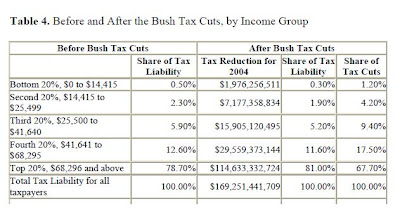
It is fundamental evil party talking point, parroted in this BS Footprint link by Elizabeth Warren, that the Bush tax cuts for the rich cost us trillions of dollars. A few minutes of internet research will show that on a percentage basis, the lowest income brackets benefited more from those tax cuts than the rich. We'll surely fix things by letting them expire in 2013, right?
 Economist Michael Stroup, of Stephen F. Austin State University, has analyzed tax rates and the amount of "progressivity" (that is, the rich pay "progressively" more) of the tax system (pdf here). The Tax Foundation reports the US has the most progressive system in the world, even more than those European social democracies which the president wants to make us more like. Stroup presents this interesting plot:
 Here's how the plot works: Increases in the size of the area between a 45-degree line and the curve (Area A) indicate greater income inequality. Greater distance between the red and blue curves (Area B) indicate the difference between income and taxation. The more the red curve is below the blue, the more progressive the tax system:

The simple fact is that every single tax policy change by both parties has led to a more progressive tax, where the rich pay a larger percentage of the tax burden than before. This has been particularly true for Republican laws like Bush's "Tax Cuts for the Rich" - or Reagan's before him.
This idea needs to be eradicated.
Mr. President, if the secretary and Warren Buffet pay the same tax, that's a flat tax. I really doubt that's what you want, but if you do, I could be on your side (assuming you don't want a flat 100% rate). As Kerodin and others say (I agree), if it's wrong that Buffet pays 15% on capital gains while his secretary pays 35% on ordinary income, let's drop her tax rate to 15%, too. Of course, in reality and as you readers know, Buffet is paying tax on income from money that was already taxed at around 35%, so he's paying closer to 50% tax. But let's not let facts get in the way of good story, shall we?
It was reported this summer that we have crossed an economic Rubicon: more than half the population pays no tax (federal income tax, that is).
"But right now, the fact (is) that according to the Committee on Joint Taxation, 51 percent -- that is, a majority of American households -- paid no income tax in 2009. Zero. Zip. Nada. … Actually, to show how out of whack things have gotten, 30 percent of American households actually made money from the tax system by way of refundable tax credits -- the Earned Income Tax Credit, among others. So 51 percent of American households paid no income tax in 2009, but 30 percent actually made money under the current system." (emphasis added - GB)Mind-bogglingly, Zerohedge wrote last March (and I covered with more details) about these 30 percent who make a profit off the tax system that "a one-parent family of three making $14,500 a year (minimum wage) has more disposable income than a family making $60,000 a year. And if that wasn't enough, here is one that will blow your mind:
"If the family provider works only one week a month at minimum wage, he or she makes 92 percent as much as a provider grossing $60,000 a year."The fate of the country is sealed, assuming the 51% of the population who pay no taxes shows up for every election, the percentage of people paying income tax will go down until the country collapses. If it hasn't already, anyway.
It is fundamental evil party talking point, parroted in this BS Footprint link by Elizabeth Warren, that the Bush tax cuts for the rich cost us trillions of dollars. A few minutes of internet research will show that on a percentage basis, the lowest income brackets benefited more from those tax cuts than the rich. We'll surely fix things by letting them expire in 2013, right?
The current six rate brackets of 10%, 15%, 25%, 28%, 33% and 35% will be replaced by five new brackets with the higher rates of 15%, 28%, 31%, 36% and 39.6%
Note that the lowest bracket tax rate goes from 10% to 15%, or a 50% increase in their taxes. The highest bracket goes from 35 to 36.9%, or 5.4%. The lowest income people will be hit the hardest. In this analysis from the Tax Foundation, you can see how the share of tax liability went up for the top quintile, and down for all of the others under the Bush cuts.
Note that the top quintile pays 81.0% of the entire tax burden of the country.


If everyone paid the same proportion of his income in taxes, the tax curve would lie perfectly on top of the income curve.While this is a snapshot for 2004, Stroup writes:
If the poor paid a larger share of their income in taxes than the rich, the tax system would be regressive and the tax curve would lie above the income curve.
However, since the rich pay a larger share of their income in taxes than the poor, the tax curve lies below the income curve.
Over time, the share of taxes paid by the rich has grown more than their share of income. For example, between 1986 and 2004:In the years since this was written the percentage of the tax burden paid by the top 1% of earners has increased, to approximately 40%; 42% according to some sources. The Tax Foundation provides this data:
The income share of the top 1 percent of taxpayers rose 7.7 percentage points, from 11.30 percent to 19 percent of total income.
The share of income taxes paid by the top 1 percent rose even more, by 11 percentage points, from 26 percent to 37 percent of total income taxes paid.

The simple fact is that every single tax policy change by both parties has led to a more progressive tax, where the rich pay a larger percentage of the tax burden than before. This has been particularly true for Republican laws like Bush's "Tax Cuts for the Rich" - or Reagan's before him.
The most important reason for the increasing progressivity of income taxes is that virtually every Republican tax bill over the past 25 years has taken more and more people off the tax rolls. Democratic opponents inevitably point to the lowering of the highest tax rates as a “giveaway to the rich.” They conveniently ignore the fact that in lowering the rates, these same tax bills also widened the base. By allowing fewer deductions, exemptions and loop holes, the bills exposed more income to taxation. More importantly, if people at the bottom of the income ladder are completely taken off the tax rolls, the burden of the tax system will shift to those at the top, no matter what rates they pay or what deductions they take.Getting into discussions with the evil party is a waste of time; they will never tell you what the "fair share" of their income folks should pay. A couple of weeks ago, congresscritter Jan Schakowsky famously told an interviewer "you don’t deserve to keep all" of what you earn, yet refused to specify how much was fair. In her world, and all of the evil party, what you earn belongs to society first and they will decide how much you're allowed to keep.
This idea needs to be eradicated.
Friday, September 23, 2011
Mr. Gold's Wild Ride
(for the vast majority of you who don't live in Disney's shadow, there's a popular kiddie ride there called "Mr. Toad's Wild Ride" - consider this homage...or pun)

The past three days depicted on this Kitco chart show a precipitous drop in gold prices, from about $1815 opening on Wednesday to a $1657 close today - and that price was after gaining some ground back from an intra-day low of about $1630. Silver didn't escape, either, going from over $40 to an intra-day low of nearly $30/oz:
 So what's going on?
To some degree, it's a "perfect storm" of the market pressures from the impending European collapse, the reaction of worldwide stock markets to the Federal Reserve's "Twist" (bond swap) announced a couple of days ago, and a repeat of something which happened a few months ago and brought silver down from about $50/oz to closer to $40: an increase in margin requirements.
According to Zerohedge, CME announced large increases in margins required. The document from CME is there.
While it can be argued that the Fed's recent actions really can be interpreted as more money dumping (QE666), the stock markets really didn't take it that way. I've heard two different explanations for the stock market crashes, both of which make sense. First, there's no doubt that the EU is in deep crisis, and the commitment of Germany to not let Greece - and the EU - fail, just might pull them all into the abyss, and markets are scared of that. Second, the US stock market in particular (Europe to a lesser extent) was expecting a real QE from the Bernank and are throwing a temper tantrum over not getting their free money. Yeah, it's the behavior of two year old spoiled child, but that pretty much describes Wall Street most of the time.
For longer than I can remember a distinct starting point, the rule of thumb on commodities was "buy the dip" (or BTFD as they say on Zerohedge - and you can figure out the F all by yourself). This is definitely a dip. I've already heard of local coin shops saying they will not sell their silver coins at less than a $38 or $39 spot price today, not believing for an instant the price is going to stay down.

The past three days depicted on this Kitco chart show a precipitous drop in gold prices, from about $1815 opening on Wednesday to a $1657 close today - and that price was after gaining some ground back from an intra-day low of about $1630. Silver didn't escape, either, going from over $40 to an intra-day low of nearly $30/oz:

To some degree, it's a "perfect storm" of the market pressures from the impending European collapse, the reaction of worldwide stock markets to the Federal Reserve's "Twist" (bond swap) announced a couple of days ago, and a repeat of something which happened a few months ago and brought silver down from about $50/oz to closer to $40: an increase in margin requirements.
According to Zerohedge, CME announced large increases in margins required. The document from CME is there.
And there you have it: CME just hiked gold margins by 21%, silver by 16% and copper by 18%. Mystery solved.from a slightly more recent update:
Everyone knew they (ed. - the margin hikes) were coming... Just not when. Now that the gold liquidation frenzy has struck we still don't know much if anything: who was it, why, and where did the money go? Some rumors have it as a bank in Central, Eastern Europe unwinding massive PM positions, which if true is paradoxically bullish for gold and silver as reported previously, as it means the already tight liquidity situation in Europe is about to come to a head, possibly as soon as this weekend. Others speculate it was a plain vanilla satisfaction of collateral requirements by a big funds who may or may not be liquidating and who have sizable gold positions. Or, the simplest explanation, was it simply an expectation (and leak) of a gold margin hike?Interestingly, this writer put out a newsletter 10 days ago predicting gold would go back to "the 1650s". In other words, he felt this would be the price level just on his technical analysis and without considering changes in margin rates.
While it can be argued that the Fed's recent actions really can be interpreted as more money dumping (QE666), the stock markets really didn't take it that way. I've heard two different explanations for the stock market crashes, both of which make sense. First, there's no doubt that the EU is in deep crisis, and the commitment of Germany to not let Greece - and the EU - fail, just might pull them all into the abyss, and markets are scared of that. Second, the US stock market in particular (Europe to a lesser extent) was expecting a real QE from the Bernank and are throwing a temper tantrum over not getting their free money. Yeah, it's the behavior of two year old spoiled child, but that pretty much describes Wall Street most of the time.
For longer than I can remember a distinct starting point, the rule of thumb on commodities was "buy the dip" (or BTFD as they say on Zerohedge - and you can figure out the F all by yourself). This is definitely a dip. I've already heard of local coin shops saying they will not sell their silver coins at less than a $38 or $39 spot price today, not believing for an instant the price is going to stay down.
Thursday, September 22, 2011
Hey... That Was a Milestone!
Last night was my 500th post.
Sorry for the shouting. No, I don't know how many days I've been here, but just over 19 months. I started on February 21, 2010, with a post that I still like. I do my best to put up something daily, but there have been times when I have been unable to. And a few rare days where I've put up two.
Sorry for the shouting. No, I don't know how many days I've been here, but just over 19 months. I started on February 21, 2010, with a post that I still like. I do my best to put up something daily, but there have been times when I have been unable to. And a few rare days where I've put up two.
Wednesday, September 21, 2011
And the Answer is: A Head Fake
The Ben Bernank and the Fed board of gub'nors released a new plan today: let's get rid of $400 billion dollars in short term bonds, and buy long term bonds! They faked us out - looked like they were going the QE route, but acted more like folks with max'ed out credit cards. Which they pretty much are.
(and before I move on, JDA has the most excellent photoshop of Bernanke ever... I'm going to respect her copyright and say clicky the link and go look... I'll wait.)
The 30 year bond then cratered, hitting its lowest level since Jan. '09:
 Followed by the DJIA itself
 The idea here is that the Fed has too much money in short term bonds that have to be paid back in the next couple of years. This action essentially trades the short term bonds for long term bonds, enabling them to kick the can a little farther down the road, and essentially saying the economy isn't going to get much better for perhaps five to ten years. I think what the Fed is doing is sort of like paying off one credit card with another; one of those "no payment for 90 days!" offers. So, for the record, I was wrong yesterday in predicting another QE.
I believe the reason the Dow tanked was not concern over what they did, but disappointment over what they did. The market was expecting more free money to try and make even more free money with. This may be the first time the Bernank did not deliver what they expected.
The spin and PR is flying already. They are doing everything they can to keep from crashing into the mountain below them, and are incapable of not messing with the economy. Fundamentally, I don't think they changed the picture at all. I still expect inflation followed by austerity measures everywhere; the march of the FSA and a prolonged period of bad history, "with a 25% chance of the Zombie apocalypse". Gold and silver? Might go on sale due to knee-jerk reactions, or acute needs for cash to cover market shorts. Prepare to buy on the dips.
(and before I move on, JDA has the most excellent photoshop of Bernanke ever... I'm going to respect her copyright and say clicky the link and go look... I'll wait.)
The 30 year bond then cratered, hitting its lowest level since Jan. '09:


I believe the reason the Dow tanked was not concern over what they did, but disappointment over what they did. The market was expecting more free money to try and make even more free money with. This may be the first time the Bernank did not deliver what they expected.
The spin and PR is flying already. They are doing everything they can to keep from crashing into the mountain below them, and are incapable of not messing with the economy. Fundamentally, I don't think they changed the picture at all. I still expect inflation followed by austerity measures everywhere; the march of the FSA and a prolonged period of bad history, "with a 25% chance of the Zombie apocalypse". Gold and silver? Might go on sale due to knee-jerk reactions, or acute needs for cash to cover market shorts. Prepare to buy on the dips.
Tuesday, September 20, 2011
Fed to Announce Next QE Tomorrow
The Fed is scheduled to announce the still-secret results of their FOMC meeting tomorrow. I join Zerohedge (quoting Pimco, the 800 pound gorilla of the bond world) and the others who think they have no alternative in predicting the next round of money creation. I've been blowing this horn since last April, and it still looks inevitable to me.
They won't call it QE3. The phrase "Liquidity Injection" was used last week to cover some of the bailout funding the Fed is doing for Europe - they may use that term.
I'll just call it QE666 Next major milestone will be one of the European basket cases collapsing: Greece, Italy, Spain, Portugal, even France. Remember, if the Euro collapses, the EU is done.
There is no limit to how miserable the bureaucrats will make ordinary people in their determination to keep the "one world" dream alive.
They won't call it QE3. The phrase "Liquidity Injection" was used last week to cover some of the bailout funding the Fed is doing for Europe - they may use that term.
I'll just call it QE666 Next major milestone will be one of the European basket cases collapsing: Greece, Italy, Spain, Portugal, even France. Remember, if the Euro collapses, the EU is done.
There is no limit to how miserable the bureaucrats will make ordinary people in their determination to keep the "one world" dream alive.
The "Whip it Out" Meme
The "show me your EDC knife" meme seems to go back to Og. Here's mine:
 It's my second Cold Steel knife, and a real gun show bargain. Very much like the 4" TiLite with Zytel handle here, but with a black finished steel blade. I've carried several different knives, but this has been my EDC for a few months. If you're a long time reader, you know I've made a few knives and am studying how to make serious blades.

Monday, September 19, 2011
A Meme I'm Down With
I saw it at Sean's and he got it from Larry; it's list of the top 5 guns you want with the one you want most as #1.

- Savage Scout FCM in .308
- XDm in .45 ACP or the XD Compact in .45 - the XD is probably a better carry gun.
- Savage Palma bench rest rifle, probably in .308 (this one)
- Wilson Combat 1911 - I've never shopped models, as they're way out of my price class - but this one will do.
- A nice .22 LR Revolver - probably this one from S&W. Or the new Ruger if it turns out to be a good one.

Sunday, September 18, 2011
Day Of Rage, umm, Day of Mild Annoyance
So yesterday, 9/17, was supposed to be a "Day of Rage" to occupy Wall Street. Only it didn't go over so well. Wall Street is peaceful this morning.
 A couple of hundred protesters showed up, and my guess is they don't have much of a clue what they're actually protesting. Hardly a dominating crowd, the Blaze reporter says, "This crowd looked more like Ben and Jerry’s hippies than communist storm troopers." And it featured morons like this (from the linked article at the Blaze):
 who may have nice anarchist spirit, doncha know, but doesn't realize that the top 1% of wage earners already pay over 40% of all the taxes collected in the US (here, for one example). (Hey, Mr. "y u no pay taxes?!" - y u no spend 5 minutes reading?!)
The really delightful irony is that these low-brow communists, paid for by ACORN, SEIU, George Soros and his many foundations, complain about the TEA party, yet are complaining about exactly the same things!
One of the facts of being a 50-something cyclist is that most of the products marketed to cyclists are aimed at a younger, higher-testosterone demographic. For instance Performance Bicycle used to sell shorts they called "Performance Rage". I always used to say, "at my age, they're more like 'Mildly Annoyed' shorts. Or 'Really Miffed' shorts." That seems to be the tone of the Day of Peeved.

The really delightful irony is that these low-brow communists, paid for by ACORN, SEIU, George Soros and his many foundations, complain about the TEA party, yet are complaining about exactly the same things!
The antidote for crony capitalism, tax loopholes, et al is not to increase the power of the government to regulate them, but to get rid of big government. Which, funnily enough, is what the Tea Party has been advocating all along.How much more "in bed" with business can an administration be? I thought W was bad, but the revolving door between Goldman Sachs and the Fed.gov has been going on for a long time. I figure if Goldman donates a million dollars to the president's campaign, the might expect something in return, but the improper relations with all sorts of companies really seems to be at an all time high. I wonder if these protesting clowns will realize that the banksters they're protesting are paying for them to be there? Qui bono?
Did none of these enlightened Day of Rage organizers happen to notice that Jeff Immelt, the CEO of GE, was an honored guest of President Obama's at his 'jobs' speech to the joint session of Congress? I mean, come on! It's like they're not even trying to hide how easy it is to get in bed with the administration. And if these protesters really hate corporations, I cannot even conceive of how labor unions are avoiding their ire.
One of the facts of being a 50-something cyclist is that most of the products marketed to cyclists are aimed at a younger, higher-testosterone demographic. For instance Performance Bicycle used to sell shorts they called "Performance Rage". I always used to say, "at my age, they're more like 'Mildly Annoyed' shorts. Or 'Really Miffed' shorts." That seems to be the tone of the Day of Peeved.
Subscribe to:
Posts (Atom)