Thursday, March 17, 2022

SLS On the Way to the Pad

It's really a major milestone that the Artemis 1 mission SLS has begun its move to the launch pad this evening.  Yeah, it wasn't at 5PM EDT as advertised, slipping until 6PM, but in the big picture of the whole Artemis program, it's an important step.  Every major step from here on is more important. 

As you can see by the time in the upper left, five minutes after first motion (possibly a few more - they may have started a few minutes before 6PM), the crawler transporter wasn't fully out of the Vehicle Assembly Building, but the booster was far enough out of the building to catch some sunlight.  

The crawler can only move around 1mph when fully loaded like this, and it's about 5 miles from the VAB to pad 39B, so it won't be completing its journey until after 11PM tonight.  Add to that time that it can't go 1 mph all the time, especially not during the climb up the inclined ramp at the pad.  The NASA Spaceflight commentators are saying the official number for the time to complete the task, as determined by the crawler transferring the full weight of the mobile launcher tower onto the supports at the pad, is for it to take 11 hours.  That will be early tomorrow morning.  If it's before 5AM Eastern on 3/18, the live video coverage is here.

The Wet Dress Rehearsal is No Earlier Than (NET) April 1st.  The actual first test launch is NET "June" (no date specified).  


For anyone intending to watch tomorrow night's Falcon 9 launch, either on the YouTube feed, or outside live, SpaceX is saying the launch time has been backed out to 11:24PM EDT tomorrow night from the 9:30PM time I reported yesterday. 


Wednesday, March 16, 2022

A Little Space News Roundup

Say this after me - something I wasn't sure I'd ever say - tomorrow, the first SLS Artemis mission vehicle, called the Artemis I stack, will roll out from the VAB to the launch complex.  This is according to the NASA Artemis mission page.  This is in preparation for the first wet dress rehearsal which will take place on April 1.  (I'm not making this up.) 

NASA’s new Moon rocket stands poised inside Kennedy Space Center’s iconic Vehicle Assembly Building ahead of its first journey to the launch pad. Comprised of NASA’s Space Launch System (SLS) rocket and Orion spacecraft, and sitting on its mobile launcher, the Artemis I Moon-bound rocket is ready to roll March 17 to Launch Complex 39B for its wet dress rehearsal test targeted to begin on April 1st.

A WDR is loading the vehicle with its cryogenic fuel and oxidizer, and going through the complete countdown cycle but without starting the engines. 


SpaceX is going for a dozen. 

SpaceX is keeping up its tempo of one Falcon 9 launch per week this year, with a launch this Friday night from SLC-40 on the Kennedy Space Center.  NET 9:30 p.m. EDT Friday night, which makes it 0130 UTC on Saturday. 

The last few launches have been on trajectories to the SE, down near and east of the Bahamas with the recovery drone barge on the NE side of the Bahamas.  This launch will be going to the NE as most Starlink launches have gone.  Being almost due south of the launch complex, the SE trajectory is a lot better for watching from my side yard.  (Except for when the last one went in front of the sun on my line of sight) 

The lead-in for this couple of paragraphs is that an "oh, by the way" note on Teslarati, obtained from another source.  This will be the first attempt to launch a Falcon 9 booster on its 12th mission.  Remember when ten flights was the aspirational goal?  The new goal for the number of launches hasn't been announced that I know of, but they're going to keep testing the fleet until issues show up.

According to Next Spaceflight, Falcon 9 B1051 will support the mission, becoming the first SpaceX booster of any kind to attempt its 12th orbital-class launch before midnight on Friday, March 18th. 


It turns out Pi Day has another special meaning that I wished I'd known of on Monday.  Monday was the 20th birthday of SpaceX.  

Watch that video.  As the timer says, it's one minute and 38 seconds of highlight reel.


Astra's latest orbital launch attempt from Kodiak Alaska was a success with the payload confirmed to be delivered properly and responding to its controllers.  Congratulations to them on the success.  

I don't have a link handy but have read that regarding that failed February launch from Cape Canaveral Space Force station they quickly found the cause for that failure.  The failure involved the mechanisms that controlled releasing the payload fairings in flight.  It was one of those cases where the instructions for wiring the mechanism were followed to the letter, and the inspectors verified they were followed, but the instructions were wrong.  Anyone who has done product development has seen something similar to that.


Tuesday, March 15, 2022

A Surprising Unanimous Bill Passed Out of the Senate

Surprising or even shocking, the Senate today unanimously passed a bill to end Daylight Savings Time, making the last transition to ever occur in 2023.  As I understand it, next fall we'll go back on standard time, and will then go back to DST in March of '23 and never change again.  

The Senate approved the measure, called the Sunshine Protection Act, unanimously by voice vote. The House of Representatives, which has held a committee hearing on the matter, must still pass the bill before it can go to President Joe Biden to sign.

The White House has not said whether Biden supports it. A spokesman for House Speaker Nancy Pelosi declined to say if she supports the measure but said she was reviewing it closely.

Senator Marco Rubio, one of the bill's sponsors, said supporters agreed the change would not take place until November 2023 after input from airlines and broadcasters.

Naturally, since the bill came out of the Senate, it will have to go over to the house to be passed (or killed) over there.  Should it be modified in the house (my guess is Nancy can't let it just go without personalizing it), it will have to go to a reconciliation committee and endure more "process." 

Senator Rubio had a couple of good lines about this.  He said, 

"I know this is not the most important issue confronting America, but it's one of those issues where there's a lot of agreement," Rubio said. "If we can get this passed, we don't have to do this stupidity anymore.  Pardon the pun, but this is an idea whose time has come."

Senator Rubio is one of the bill's sponsors and one of our Florida senators.  I know I've talked about this several times, but Florida passed a law back in '18 saying we would stay on DST permanently and never change clocks again, but couldn't actually do so without the Fed.gov granting us that permission.  I've heard Senator Rubio say that the only power states have is to stay on standard time.  Which seems to imply staying on DST is somehow wrong.  I don't have to add that IANAL but this certainly doesn't seem to be a legitimate Federal power to me.   

Since 2015, 30 states have introduced legislation to end the twice-yearly changing of clocks, with some states proposing to do it only if neighboring states do the same. A 2019 poll found 71% of Americans prefer to no longer switch their clocks twice a year. The only controversy seems to be if states prefer to stay on standard time year round or stay on DST all year, and if they had asked me (hah!), that's the only change I'd think of, but to paraphrase Rubio, this is one of those issues with wide support and it should pass.  

Yeah, you'll have groups in each state that want the opposite times.  That's inevitable.  In Florida it appears the main tourist industry reps want to stay on DST (which is why the law was passed in '18) while some other groups want the other way.  The inevitable physics of the situation is that states get different variations of their amount of sunlight because that varies with latitude.  That change in sunlight hours with the seasons is caused by the 23.5 degree inclination of Earth's orbit.  Here in the southernmost reaches of the US, (I'm not in the tropics - none of Florida is) we have less variation.  On the summer solstice, our day is just short of 14 hours long - 13:55:30.  On the winter solstice it's 3 hours 34 minutes shorter, 10:21:43. (source)  In Minneapolis, MN, the longest day lengthens to 15:36:48 - just over two hours longer, and the shortest day shortens down to 8:46:12, virtually seven hours shorter than their longest day.  Nothing can be done about that.  All DST does is change what we call those hours.

This graphic is from Scott Yates, founder of the website called #LockTheClock, and when I checked to see if the site was still there, see that he's running for congress in Colorado with this a key part of his platform. 

A couple of days ago, maybe "DST Monday" Mrs. Graybeard and I were talking about DST.  I honestly don't remember life before changing the clocks.  I'm pretty sure DST came to the state in my life, but I just don't remember what sunrise and sunset times were like all year without it.  The only thing I can think of (prodding myself) was when they did a "double DST" moving clocks forward two hours, during the '70s OPEC oil crisis.  I'm pretty sure of that.


Monday, March 14, 2022

Missed Pi Day

I've pretty much missed it.  Most of my readers will see this on 3-15, not 3-14.  Plus, to be honest, I don't tend to do posts for Pi Day.  Searching on the phrase only turns up two.  Of the two, my warped sense of humor tends to prefer this one:

Which doesn't mention pi at all.  

So let's go somewhere else.  As a rule, I try not to post about things I know virtually nothing about but tonight I'll make an exception.  

The subject is the world of the Raspberry Pi single board computer (SBC).  Yes, I have one, a Raspberry Pi 2.  That was (relatively speaking) the New Hotness when I was retiring and I was thinking seriously of putting all of my ham shack's Windows software into Linux and using the Pi 2.  Today, if you look at their hardware page, you'll find options from a $4 Pi Pico microcontroller to a $10 bare bones, Pi Zero SBC, all the way up to a $100 full Pi computer built into a keyboard, with a mouse and Wall Wart-type power supply.  Most of their hardware is sold by other sources that experimenters will know.

Which you should buy depends on your budget and what you'd use it for.  The Raspberry Pi concept is to be a desktop computer, running on a distribution of Linux.  It's also really being pushed as way to "learn to code" for kids and others farther along in life.  It's capable of doing most anything a desktop can do, although the Arduino seems to be the microcontroller that's most preferred.  I see far more projects based on the Arduino than the Pi. 

I've used my Pi 2 with my 3D printer, running an open source SW package to help with some infrequent tasks, but what I find interesting is using it with ham radio.  I need to look into this more because it's over 6 years since I spent a couple of months trying to find Linux alternatives for some Windows software.  It's very possible there's new software out there.  A friend does a lot of activity centered on his Pi (don't recall which model) and one of his main resources is YouTuber KM4ACK, Jason Oleham.  Jason's channel has dozens of videos on various things you can do with your Pi as well as things you can't do without either a Pi or another computer.  I recommend watching the 10 minute video Raspberry Pi Ham Radio | Where to Start to get an idea of what he and the channel are about.  

So there.  Pi day without reference to the famous number.  Hope yours was fun. 


Sunday, March 13, 2022

China Unveils Smaller Copy of Starship and Superheavy

I have to start this by saying I wish I had more than one source for this, the weekly Teslarati email I get contains some information on the Chinese developing a copy of SpaceX's Starship for Low Earth Orbit flights.   They quote China's Academy of Launch Vehicle Technology (CALT) but don't include any references I can link to.  They do include, though, a graphic showing the vehicle and a flight outline.  

If you're familiar with Starship from their test flights last year, the flight profile will look very familiar.  This graphic apparently originated at a February '22 meeting in which it was presented as a fully-reusable human-rated rocket that would replace the country's existing crew launch vehicles - at least for LEO.  Fueled, like SpaceX's next-generation rocket, by methane and oxygen (methalox), it's hard to look at the vehicle's upper stage and not think of it as a Starship copy.

We've known since 2019 that the Chinese have been experimenting with grid fins similar to the ones SpaceX uses on both Falcon 9 and the Superheavy booster.  There are many reports of other aerospace agencies attempting to build off the Falcon 9 concepts and achieve reusability.  While there are many claims that others are copying SpaceX, this Starship concept looks to remove all doubt.  

Note the similarity in the flight path, especially the right half of that graphic. The Second Stage clone would use the same profile SpaceX has developed, with two flaps on each side of the second stage at the front and back of the lander.  The lander will descend while decelerating in a horizontal position, and then flip to vertical at the very end of descent to perform a propulsive landing. 

The system seems to be smaller than Starship and that seems like it has to help them.  I think some of the difficulties SpaceX has with the system is partly from how big it is.  

Three main differences between Starship follow. First, China wants the rocket to be able to launch about 20 tons to LEO, while Starship is aiming for 100-150+ tons to the same orbit. Second, the booster appears to be a visually identical copy not of SpaceX's Super Heavy - but of Blue Origin's New Glenn first stage. Finally, instead of an ultra-high-performance engine like SpaceX's Raptor, China's next-gen crew launch vehicle would use a simpler gas generator engine cycle - less efficient but much easier to design, build, and make reliable.

The author of the email piece, Eric Ralph, had a positive take on the Chinese copying SpaceX.  I have to admit I'd never thought of it this way.  He talks about how ULA, Arianespace and Roscosmos have just puttered around paying lip service to reuse but doing essentially nothing to develop it, and while China has been slow, they seem to be actually doing something.

[...]The half-hearted stumbling about of formerly great launch providers makes China's strategy of observing what has worked and copying successful designs (or at least copying a company with a strong record of success) look like a stroke of brilliance. While the speed of the country's efforts to develop reusable rockets has left plenty to be desired, at least its space agencies, design bureaus, and startups are actually trying to seriously respond to and learn from SpaceX's successes.

I've long thought that the way SpaceX developed the technology was brilliant.  I could see from the way ULA CEO Tory Bruno talked that he thought it would cost way too much money to develop and he just saw the costs entirely differently.  SpaceX seemed to think that they sent up a Falcon 9 for hire and when the booster separated, it had just been thrown out.  It's now "free" as if they picked it out of a trash pile to experiment on.  They can tell the engines to turn on for a very minimal amount of extra cost, and guide it to where it could land.  As long as the primary mission of launching a customer's satellite was accomplished, and every launch coverage has stressed that was their crucial part, everything after MECO was teaching them more than if they dropped the booster in the ocean.  True, the recovery drones were an expense and I'm sure there were others, but those costs get amortized out over many recoveries - well over 100 at this time.

Chinese Long March 2 grid fins in 2019.  CASC Photo.


Saturday, March 12, 2022

No, Russia Is Not Threatening to Leave an Astronaut on the ISS

Just to be clear, I've seen this story in a dozen places, like yesterday on ZeroHedge, and while there are many sources it's not worth looking them all up.  It all stems back to the cascade of tweets from Dmitry Rogozin at Roscosmos, that we talked about most of the first week of the month (Friday 3/4).  This week, the threats have centered on "abandoning" astronaut Mark Vande Hei currently on the station. Vande Hei is scheduled to return to Earth in a Soyuz capsule at the end of this month, landing in Kazakhstan.  NASA officials are expected to be there to greet him and bring him back to the United States.  This is all pretty routine.

Eric Berger at Ars Technica has done a bit more research and digs out an important detail:

The source of this "news" appears to be a video published more than a week ago by a Kremlin-aligned publication, RIA Novosti. Roscosmos TV provided footage for the video, but in sharing it acknowledged that the video was a "joke." Now, this is an exceptionally poor joke given the tensions on Earth, but it is important to understand that sharing a video a week ago does not mean Russia is threatening to leave Vande Hei behind. Nothing has changed since the video was posted.

The first link is a Twitter thread from Katya Pavlushchenko, dated March 5th, which is worth looking at, including the video from RIA Novosti.  The second link is in Russian, so I'll take their word that it said the whole thing was a lame joke.  Granted it might make Rogin look good to his home audience. 

As we've been discussing here all along, NASA has said "Operations have not changed at all," and will probably end up talking about it in a previously scheduled press conference on Monday March 14th at 2PM EDT.  That conference is to discuss some spacewalks aimed at improving the ISS that are set for Tuesday 3/15 and the following Wednesday 3/26.   

All of that is not to say that everything is just completely peachy keen with Roscosmos.  

Space News, for example, tallied up 16 commercial launches that had been scheduled to fly on the Russian Soyuz rocket during the next two years. These payloads are now stranded, affecting customers ranging from the private company OneWeb, to the European Commission, to the government of Sweden. And the joint Europe-Russia probe scheduled to launch to Mars this year, ExoMars, will be delayed for years and may very well be canceled, sources say.  

As we're half a month into the war in Ukraine, it's impossible to call where this goes.  I don't think anyone can realistically call what Putin is going to do about this.  Yes, it's income for the country and it may be viewed with national pride by Russians.  It could be, however, that if Putin decides to end Russian participation in the International Space Station it makes him look even stronger to some people and is good politics for him personally.

The important point is that the Mark Vande Hei isn't going to be abandoned on the ISS with no way down, and the ISS isn't going to de-orbit.  We went into the re-boosting issue in the first week.  There's currently a Crew Dragon spacecraft docked to the ISS, and while there are more astronauts on the ISS than it could handle, I bet that if they asked any of the Crew-3 astronauts if they'd wait on the station longer and give up their seat for Vande Hei's ride home, all of that could be worked out.  I know SpaceX has just been awarded contracts for more three more crewed NASA missions to the ISS since Boeing's Starliner is still incapable of flight.  The next manned mission for NASA is Crew-4, currently set for no earlier than (NET) 15 April and the crews typically will switch out with a brief period together on the ISS.  Before that, however, SpaceX will also carry the first totally commercial crew to the station for Axiom, NET March 30 at 2:46PM EDT.  

It wouldn't surprise me if SpaceX built another Crew Dragon faster than almost anyone would expect and offers a custom ride to get Mark Vande Hei down.    

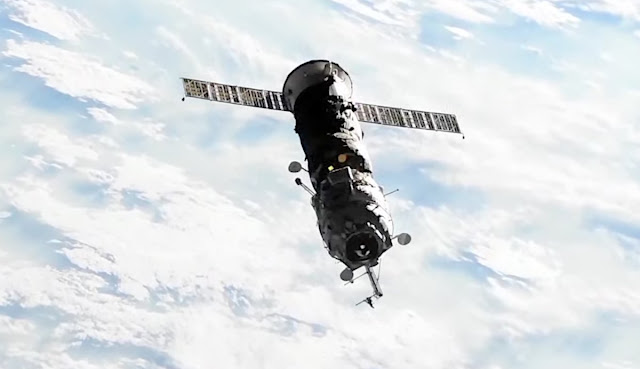
The Russian Nauka module last July, just before docking with ISS - and then knocking it off it's desired orbital attitude.  


Friday, March 11, 2022

Stepping Up The World of Satellite Phones

As the world of terrestrial cellphones radically expanded, a branch developed that was entirely different in its hardware but served a similar purpose.  Satellite phones were pioneered by Inmarsat and the Motorola Iridium program in the late 1990s but the field has changed since then.  Motorola is gone (although the Iridium service based on their original satellites appears to be there) and other companies have joined in.  The field, like much of satellite communications, has divided into satellites in Geosynchronous Earth Orbit (GEO) so that the satellites service small areas of the globe but are there all the time, and satellites in Low Earth Orbit (LEO) that move across the sky and don't give continuous coverage to any place.  The phones are different from the conventional cellphones most of us carry around with us, and the inescapable physics of communicating from GEO to the ground means they sometimes don't do much for you, like only providing one way messages or texts.

All of that is on the cusp of change as startup company AST SpaceMobile is moving to put more conventional cellphone base stations in LEO and allow anyone anywhere to connect to the network by going through space.  This is still preliminary as they have only done some testing of their concepts so far, so don't expect it Real Soon, Now, but they announced this week that they've signed agreements with SpaceX to launch the next level experiments of their satellites.  In addition to the planned launch this summer of their Blue Walker 3 prototype satellite (BW3), the agreement covers the launch of the first BlueBird satellite and provides a framework for future launches. 

AST SpaceMobile rendering of their BW3 satellite.

The BW3 satellite is slated to launch from Cape Canaveral on a Falcon 9 vehicle. The satellite has an aperture of 693 square feet and is designed to communicate directly with cell phones via 3GPP standard frequencies.

As you can see in their drawing, the antenna is a phased array or flat panel style antenna.  The antenna needs to be folded in a complex origami-like way to fit in the Falcon 9, so this is a major test of that operation.  Which is vitally important because the production BlueBird satellites will carry an antenna that unfolds to 4800 square feet.  The constellation of these BlueBird satellites that they're planning is nowhere near as big as the Starlink constellation but is still a respectable 243 satellites being planned.  

Thanks to those massive antennas, though, AST says its BlueBirds will theoretically be able to “reach over 700 million unconnected people,” though it’s less clear how many users the constellation – or a single satellite – will be able to simultaneously support.  

I found it interesting to note that AST said it has already demonstrated the space-to-ground connection by doing it backwards.  They launched what was basically a modified (to be controllable) mobile phone made into a CubeSat and then used that orbiting phone to connect to a simulated BlueBird satellite on the ground.


Thursday, March 10, 2022

I Should Save This One for April Fool's Day, But...

Somebody's going to leak it to the wider press anyway.  Reproduced completely as is from this week's Rocket Report from Ars Technica.  Which always arrives in the email before they post it to the website.

German feminists release gender equality rocket design. A German feminist art group has revealed a vulva-shaped spaceship concept, Dezeen architectural magazine reports. The WBF Aeronautics group is encouraging the European Space Agency to help realize this design in order to better represent humanity in space and "restore gender equality to the cosmos." The group created the Vulva Spaceship concept to challenge the convention of, ahem, phallic spacecraft design.

This is not the Onion ... "The project adds another dimension to the representation of humanity in space and is communicating to the world that anyone has a place in the universe, regardless of their genitalia," the organization said. Due to this optimized V-shape, the design guarantees maximum fuel efficiency, the artists said. For the project to be considered by the European Space Agency is needs 500,000 signatures on the change.org website. As of Thursday afternoon, 663 people had signed. (submitted by HoboWhisperer)

I don't believe I've ever seen anything in the Rocket Report that had the statement, "this is not the Onion."  


Wednesday, March 9, 2022

Virgin Orbit Has One Big Thing Going For Them

Sir Richard Branson's Virgin Orbit has one major advantage as a small satellite launcher: the fact that their launcher is dropped from a 747 implies that they can put a satellite into orbit from any airport big enough for the jet to fly from.  

As almost an aside, it seem there's actually more demand for launch services than there are launch pads, at least as far as I can tell from reading about attempts to establish spaceports all around the world.  I see things like a group trying to create a Space Port in lightly populated Camden County Georgia and the voters voted it down, over concerns that it might endanger visitors to a National Seashore.  More likely, they probably thought it would make the area less pretty but they wouldn't say that.

Back to the original topic, Virgin Galactic and European in-space manufacturing tech start-up Space Forge today announced an agreement to launch the first satellite developed in Wales, with the mission launching this summer.  A satellite from Wales being launched from Cornwall makes this an all UK mission and it looks to be the first ever.

In a historic moment for UK space, the satellite will be launched as part of a broader joint UK-US mission to open the country’s first domestic space port in summer 2022 out of Spaceport Cornwall in Newquay, Cornwall.

Spaceport Cornwall is a name I've been reading in the press for a while as one of the attempts to establish spaceports all around the world.  I didn't know they were close to supporting missions, or would be within the few months left until summer.  A look over their web site shows they seem to emphasize Virgin Orbit and "horizontal launches."  It might be that they're eschewing the typical vertical launch pad in favor of something  like Virgin Orbit's 747 named Cosmic Girl.  

Cosmic Girl with LauncherOne on the release pod - Virgin Orbit photo from an early test.

I can't tell you much about the mission because much of the jargon they use is opaque to me.  Things like this paragraph:

With shared values of democratising space and pioneering responsive and responsible launch technologies, the synergy between Virgin Orbit and Cardiff-based Space Forge’s ethos makes this the ideal marriage for initial launch from the UK. This, coupled with Spaceport Cornwall’s ambitions to become a world leader in responsible launch will offer a real-world example of a global shift in environmental space practice – from sustainable on the ground operations, to horizontal lower impact launch technologies, to in-orbit services minimising the environmental impacts of manufacturing.

I have no idea what that entire first sentence actually means and the rest aren't much better.  What does democratising space mean?   I thought anyone who could build a CubeSat could get it launched.  What does "responsive and responsible launch technologies" mean?  

We know that LauncherOne is a small satellite launcher with nowhere near the tonnage to orbit of a Falcon 9, Atlas V or several other vehicles, so whatever Space Forge wants to launch, it will be small.  

Aiming to unlock the next steps on the path to market expansion, dedicated in-space manufacturing, coupled with proof of reliable return, will allow Space Forge to leverage the benefits of the space environment, namely: microgravity, vacuum, and temperature, to create products impossible to manufacture on Earth. 

Dedicated in-space manufacturing?  That then shows "proof of reliable return?"  It sounds like they're launching something like a small, automated manufacturing system, that will likewise manufacture smaller systems.  Oh...kay...

If you're curious, go read the extremely self-congratulatory article about the mission - which reads like someone got a press release and just posted it. 


Tuesday, March 8, 2022

Nose Lines Matter

As in the visible lines on the nose of something that will go at hypersonic speeds.  OK, so it's a slow news day in the Space Business, I'm trying...

With the desired number of Starships that SpaceX talks about building, you've got to believe that the design of these ships is going to be heavily researched with the emphasis on what industry calls Design For Manufacturability or DFM.  If the plan is to build ten or twenty, saving a few dollars on each vehicle or an hour here and there isn't a big deal.  On the other hand, if the quantity goes up, those few dollars start to matter.  They matter even more if there's time saved with the cost savings.  

The story over on Teslarati is on how the noses of Starships have changed over the design process.  It gets more important when you know that the manufacturing processes used for the noses are essentially the same as those used to produce the fuel and oxygen tank domes.  

Though improvements and changes have almost certainly been made in the last ~18 months, the early unflown prototypes and the noses of Starships SN8, SN9, SN10, SN11, SN15, SN16, S20, and S22 have all been constructed in roughly the same way. SpaceX would first produce a series of thin, stamped sheets (gores) of steel. Once aligned on custom-built jigs, each of those gores would be welded together to form a slightly conical ring. Five total ‘rings’ would be assembled, each narrower and more conical than the last. The five sections would then be stacked one by one and welded together along their circumferences.

Altogether, something like 120 complex vertical welds would be needed just to assemble the most basic structure of a nose, followed by four or five no less complex circumferential welds to turn those sections into one cone. SpaceX’s upgraded design seeks to simplify that process mainly by increasing the size of the gores. Aside from modestly reducing the number of longitudinal sections needed to form the cone, SpaceX has also reduced the number of stacked sections from five to two, slashing the total number of gores needed by at least a factor of two or three. While not quite as substantial, the same simplification also reduces the length of vertical and circumferential welds needed to assemble a nosecone.

In this photo (BocaChicaGal at NASASpaceflight.com), with an early nose cone on the left and an early 2022 nose on the right.  The one on the left is obviously not as smooth as the newer one on the right, and there are more obvious horizontal weld lines.  The nose lines look better on the right.  I know the number of gores has been reduced, but don't have a number showing the change from the earliest to the most recent noses. 

It appears that the first of the new noses to be used will be on Starship SN24, which is currently being built.  

The same manufacturing engineering team is working both the noses and tank domes, so the concept has moved to those designs, too.  SpaceX appears to have also decided to increase the size of dome gores and reduce the number of stacked sections required for assembly, from three to two.  The number of pieces for a tank dome has been reduced from 43 to 18, so the number of welds has gone down massively.

Conceptual rendering of the new domes (left) vs. the original domes as they work in the Starship from Brendan Lewis on Twitter.  The bottom dome is unaffected since it has the plumbing to attach the six Raptor engines, three sea level and three vacuum. 

No matter what sort of thing you're assembling, from computer to smartphone to a Starship, it's always a priority to investigate reducing both the component count and the number of assembly operations.  Those two usually go together.  Elon Musk has already said that manufacturing is the hard part and that when you're producing things, all the money spent on the "glamor" work in design ends up as a small, marginal cost compared to all the costs you incur by manufacturing improperly. 

When you're expecting to need to build tens of thousands of Starships, an hour saved on each one gets pretty darned important. 


Monday, March 7, 2022

A Deep Dive on How to Save the ISS

That's this morning's post from Eric Berger at Ars Technica, reprising what we all talked about last week.  In the big picture sense, it's not as completely done as I thought last week, but it's not desperately different, either.  It needs some attention to detail that all seems to be achievable.  

To begin with, last Wednesday my summary was:

Consequently, we have three options that are capable of maintaining the ISS in its desired orbit: Cygnus, Cargo Dragon and Crew Dragon. 

Of these, the two SpaceX solutions have a bit of a problem.  To begin with, although it has never successfully flown and therefore never successfully docked with the ISS, he includes Boeing's Starliner capsule.  From Eric:

Both Cygnus and Starliner can perform altitude boosts because they have robust, aft-oriented thrusters in their "service modules." SpaceX's Cargo and Crew Dragon vehicles, by contrast, eschewed a traditional service module in favor of a mostly empty "trunk" in order to maximize the amount of a Dragon spacecraft that could be reused. (Typically, a service module is jettisoned before a capsule reenters Earth's atmosphere.) However, NASA has said SpaceX is working on potential modifications to Dragon that might be capable of station re-boosts.

The larger service module of the Cygnus comes at the price of being a disposable, not reusable vehicle. They get loaded up with garbage from the ISS and burn up on the way down. 

NASA shows this rendering of the configuration of the ISS now (well, February 21st):


The Cygnus-17 module is almost dead center of the rendering, surrounded by the Russian Soyuz MS-19, Progress 80,  and Progress 79 a bit farther away.  The Crew Dragon, used by the Crew-3 mission is opposite the Progress 79.  

I hadn't heard that an earlier model of the Cygnus had been tested at maneuvering the station in the past, and that another test was planned before the end of the current Cygnus-17 mission in May.  

This Cygnus mission is the first to feature enhanced capabilities that will allow the spacecraft to perform a reboost, using its engines to adjust the space station’s orbit as a standard service for NASA. The agency has one reboost is planned while Cygnus is connected to the orbiting laboratory. A test of the maneuver was performed in 2018 during Cygnus’ ninth resupply mission. 

This doesn't change the fact that Northrup Grumman only has boosters for two more Cygnus missions because their Antares booster uses Russian engines that are forbidden now.  Don't forget that Boeing's Starliner launches on an Atlas V and that vehicle's days are numbered as well, due to its use of Russian engines.  Both companies, Boeing and Northrup Grumman, really need to address that.  Boeing is in a slightly better position because their missions are included in the stock of Russian engines that ULA bought for the rest of the life of the Atlas V, where as Northrup has a smaller number of flights available. 

Eric Berger points out that Cygnus has previously launched on an Atlas V rocket, so the hardware to mount a Cygnus on that booster has already been designed and proven.  While all of the remaining missions of the Atlas V are booked, one solution may be for Amazon to give back some of the nine Atlas V launches it has reserved for its Project Kuiper satellite constellation.  Another scenario involves launching Cygnus on a Falcon 9 rocket, something Northrop and SpaceX could probably agree upon in an emergency situation.

The looming elephant in the misty distance is that the ISS is "aging out" and while the current arrangements with Russia only last until '24, there's persistent talk of keeping the station going longer - perhaps until 2030.  NASA has been talking up privatized space stations, and has given awards of between $125 million and $160 million to four companies for this work: Axiom, Blue Origin, Nanoracks, and Northrop Grumman.  That's far from being the most viable option, though, and reality is that we might spend a couple/few years without a space station. 


Sunday, March 6, 2022

A Ham Radio Series 31 – Phased Arrays, or A Dish Without A Dish

In Ham Radio Series number 31, I went into details on the parabolic dish antennas, especially their gain and radiation beamwidth.  Given the tradeoffs in antenna construction, we always ask if there’s a better way to do things.  For example, consider satellite communications.  The satellite TV world generally uses parabolic dishes;  they may not be 12 to 15 foot diameter, circular dishes like those used in the 1980s (when I was in the design side of that world), but they’re permanently mounted on a house’s roof, or on a mast in the backyard or in some other way so that they can always see the geosynchronous equatorial orbit (GEO).  The satellites use that orbit so that the antennas don’t have to track satellites across the sky – they’re stationary.  Being in the GEO imposes costs on the satellites: they need more power to get a good signal to a smaller dish from 22,236 miles out in space.   Bigger antennas on the satellites (or the ground) can ameliorate that.  All of that goes into the system design trades and you’ve got to know the system designers have chosen a combination of antenna gains on both ends of the link and transmitter power they thought was the best trade.

Now consider situations like the Starlink internet satellites that aren’t in GEO.  They don’t want the satellites to be that far out because it adds time for the signals to travel to and from the satellites, which adds latency to the internet link.  Just the limitation of the speed of light, which is rarely a factor in daily life, adds time.  The time for a satellite signal to reach the Earth’s surface from the GEO is around 1/8 of a second (119 milliseconds)  - double that for two way communications and add any time added by the hardware and system.  Starlink has said that a they are working towards a latency goal of 20–50 milliseconds and think that 10 msec is possible.  The satellite altitudes seem to only take up around 2 msec due to the speed of light.

Because the Starlink satellites are much lower in orbit than the GEO, they’re going to be moving across the sky and the antenna is going to need to track them.  Just based on what we know of the frequencies the Starlink satellites use and their altitudes, we can’t say much about the required antenna gain or beamwidth, but with different technology than the parabolic dish, both may be adjustable. 

Consider this side by side comparison between a Dish Network antenna that would be used to receive TV from GEO to a Starlink antenna and you’ll see a striking difference.  Please let me point out that I have no reason to believe that these antennas have the same gain, just that they have the same basic purpose: receiving signals from satellites.  While the Starlink uses several frequency bands, some are the same as the DishHD antenna uses.. 

The Dish Network antenna is a design that allows the user to put three different Low Noise Block downconverters (usually just called an LNB), and each of the LNBs is at a different focal point of the small dish, allowing it to get signals from three different satellites.   Although not very noticeable in this product photo, the triple feed arrangement on the boom sticking out from the dish is curved.  

The Starlink by contrast, does not have a boom at all and is a sealed container.  I don’t know if this is official in any way, but the antenna system is referred to as “Dishy McFlatface” and the antenna is flat.  It’s not a parabolic reflector and instead of an LNB sitting above the flat face, there are hundreds of LNBs integrated into the antenna assembly.  The rectangular version of Dishy is newer; earlier versions were more circular but with portions of the circle cut off, resulting in a rectangle with rounded corners.  Another important difference is that the Starlink antenna also transmits uplink signals from the users to the satellites, so it transmits and receives.  

So how does one make a flat antenna perform essentially equal to a parabolic dish?  Back in the first article I wrote on gain in antennas, I noted the basic idea was, “stick more metal in the air,” as long as we all agree that it can’t be randomly sized and placed chunks of metal.  In this case, the antenna is an array of quarter, half, or one wave long antenna elements fed by circuits called phase shifters that create delays in the signals to the radiating elements needed to change the wavefront to the desired shape and direction.  As a result, the antenna elements can combine received signals in phase creating a much higher amplitude signal or the phase shifters can create delays between the antenna elements during transmit, creating focused beams of transmitter power. 

Don’t think of phased arrays as something new and exotic you’ve never seen.  All of the commonly used directional antennas are phased arrays; a Yagi is nothing less than a phased array of half-wave elements which, when optimized, will be slightly longer (in the reflector elements), or slightly shorter (director elements) than exactly ½ wavelength.  The Yagi is phased by the mechanical spacing, not by electronic circuitry. 

Without getting too deeply into what can be very deep, a Yagi works by interaction of currents in the elements.  Consider a three element Yagi like the one in the first post on directive antennas (post 28 and the right half of this figure) 

The driven element, like any half-wave dipole, radiates mostly perpendicular to its long axis equally forward and backward; that means into and out of the screen in this view.  When that wave gets to the rear and front elements, the wave induces a current in them and they re-radiate it with a phase shift.  Some of the re-radiated signal goes back to the driven element, and some goes the other way.  Because of the (nearly) quarter wave distances between each element, and while this is happening the driven element continues to advance in its waveform, so that by the time those reflections get back to the driven element the current on it has advanced almost a half wave.  The timing (phasing) is set up so that signals coming from the reflector forward add to the next wave at the driven element while the signals from the director are out of phase when they reach the reflector and cancel.  The phasing of the signals by the physical spacing determines the forward gain (along with other factors, for sure).  It has one driven element and two parasitic elements, but it's phasing that makes it work.

You might be saying, “OK, but this is just getting some improvement in one direction, how can a phased array get better in multiple directions?”

The biggest advantage of a phased array antenna, like the ones used in “Dishy McFlatface,” is that there can be scores of elements, not just three (to 12 or 20, like a Yagi).  The second advantage is that they can be arranged in two dimensional arrays of antennas which can allow the beam of the antenna to be swept in space, electrically steering the way the antenna is pointed.

A simple phased array can be made from power dividers, programmable attenuators and phase shifters.  Power dividers can be obtained in many division ratios, but the lowest loss versions tend to be powers of 2.  Passive power dividers tend to be reciprocal; that is they’ll split one input to two outputs or they’ll combine two inputs into one output, just by connecting them as you want.   That makes a simple eight element phased array look like this schematically (the circles with the Greek letter “Sigma” in them are power splitters/combiners – Sigma from the common math notation of “summing”):

If connected in a line, as this implies, they can point the antenna’s beam where desired, but only moving in one plane (up or down in this picture).  Connecting another eight elements in a row at right angles to this one, if fed by twice as much power and another power splitter, the beam can be pointed in two axes; both up and down and in and out of the screen.  (Duplicate everything to the right of that first power splitter and cut its input; add a splitter to feed that one with one of its outputs and use the other output to drive the new schematic page, but you do need a bigger PA – or a distributed network of smaller PAs).  

As shown, the bottom antenna has the least phase shift (delay) and fires slightly sooner than the one above it, which fires slightly sooner than the one above that, and so on with the top element delayed the most.  

Note that this is just for the transmitter side because most people find it easier to visualize combining the eight antennas to produce a beam pointed in different directions, but antennas are reciprocal, too.  The same phase shifts that will transmit in a preferred direction will receive better in that direction, too.  Circuits like this are big business, especially with Multiple Input/Multiple Output (MIMO) cellular systems like 5G.   Note that they use switched chains of attenuator, phase shifter, Power Amp or LNA (Low Noise Amplifier), phase shifter, attenuator.  Transmit path is the top four in the dashed oval; receive path is the bottom four.  It’s also possible to approach this by only switching the amplifier between LNA and PA, using half as many attenuators and phase shifters. 

A 5G cellular antenna array based on the Anokiwave AWMF-0139 quad core IC.  (Source)

Unlike the parabolic dish antenna, I can’t provide simple equations for gain and beamwidth.  They’re far too configurable for simple things like that.  They can, however, be designed to provide similar values for both.  In many applications, parabolic dishes have come to be considered as having too many disadvantages and are being replaced with phased arrays, even if they are largely mechanical and aren’t electrically steerable.  There are phased arrays of microwave antennas that are flat panels instead of parabolic dishes used in radar systems, for example.


Saturday, March 5, 2022

The Sun Had Its Termination Event

I've been tracking and reporting on Solar Cycle 25 since '18 or when folks first started talking about it.  A couple of the most recent pieces (the one before) have focused on the divergence between the behavior of Cycle 25 and the predictions of other scientists.  Prominent in these discussions have been the predictions of Dr. Scott McIntosh of the National Center for Atmospheric Research (NCAR) and his research partner Bob Leamon of the U. Maryland-Baltimore County for a very simple reason: their predictions have matched reality better than the other predictions.  

McIntosh's predictions are based on an observable thing on the sun which they call the “Termination Event” marking the end of the previous cycle and the new cycle being able to develop with less interference.  Their hypothesized pattern is that the shorter the period between the termination event of the second previous cycle (23 in this case) and the termination event of the previous (24), the stronger the new cycle can be.   The converse is true as well; the longer the period between those two (the longer the previous cycle) the weaker the current cycle will be.  It's important to note that this isn't widely accepted; they're still trying to determine if it's true or not by predicting the developing cycle.  If Solar Cycle 25 unfolds as McIntosh and team predict, the Termination Event will have to be taken seriously.  

Dr. McIntosh has reported (and relayed at SpaceWeather.com) that the termination event happened on December 13th of '21. 

Researchers have long known that solar cycles can overlap. The twist added by McIntosh and Leamon is the realization that overlapping cycles interact. This makes sense. In the early 20th century, George Ellery Hale discovered that the magnetic polarity of sunspot pairs reverses itself from one cycle to the next; indeed, the sun’s entire global magnetic field flips every ~11 years. When adjacent, opposite-polarity solar cycles overlap, they naturally interfere.

The Termination Events, then, mark when opposing polarity magnetic fields stop being present, removing inhibitions on the new cycle.  

Dr. McIntosh notes bright areas seen in Extreme Ultra Violet (called BrightPoints) on the surface of the sun and when they go away. A Twitter thread explains this in greater detail.

What does this all mean?  A precise date for the Termination Event of Cycle 24 allows them to use their algorithms to predict what the peak of this cycle will be.  Cycle 24 hung on far longer than his team expected it to and dramatically affected McIntosh's predictions.  His original prediction was for very high levels of activity, perhaps even being the strongest cycle ever seen.  That has been reduced greatly.

“We have finalized our forecast of SC25’s amplitude,” says McIntosh. “It will be just above the historical average with a monthly smoothed sunspot number of 190 ± 20.”

“Above average” may not sound exciting, but this is in fact a sharp departure from NOAA’s official forecast of a weak solar cycle. It could be just enough to catapult Terminators into the forefront of solar cycle prediction techniques.


Predictions for Solar Cycle 25. Blue is the “official” prediction of a weak cycle. Red is a new prediction based on the Termination Event. It's still true that their predictions are matching the current cycle better than the NOAA "consensus panel" forecast (in blue) even after shifting their forecast peak date six months earlier.  McIntosh's predictions appear to be six months earlier than that, and maybe more.  I'd also say that red band looks more like 190 ± 40 or even 50 than ± 20.


Friday, March 4, 2022

Let's Just Call It Dmitry Grogozin Week

The statements out of Grogozin that we talked about earlier in the week almost smelled of vodka.  Through the monitor's screen.  They were irrational to the point that I had to think that's what influenced the head of the Russian Space Corporation, Roscosmos to come up with them.  Late yesterday, I learned of more. 

One of the innocent victims of the world's reaction to Russia invading Ukraine is a company called OneWeb.  A quick search of the blog shows that I've never mentioned them before, but OneWeb is company that's in the Internet connection business, and which is partially owned by the British and Indian governments.  The company aims to compete in the same market as SpaceX Starlink providing satellite internet connections.  

Choose OneWeb’s Low Earth Orbit network for fibre-like connectivity where fibre cannot easily reach. Make OneWeb part of your solution to integrate, manage, flex, and scale better connectivity.

To my way of looking at their situation, they're so far behind that it's hard to think they can really be a competitor.  Maybe they could be in some restricted area of the Earth.  While Starlink isn't fully able to meet their availability goals, they have about 2000 satellites in orbit; OneWeb has 428.  They were scheduled to launch 34 satellites into orbit today, until Grogozin and Russia cancelled the flight.  Then Rogozin took a rather unusual move on top of that.  

But on Wednesday the chief of Russia's space program, Dmitry Rogozin, issued two demands before acceding to the launch. One, he said, OneWeb must guarantee that its satellites will not be used for military purposes. And two, the UK government must give up its ownership of OneWeb.

OneWeb had contracts with Roscosmos to launch the remainder of OneWeb's planned total of 648 satellites for its initial constellation.  They had planned to start selling service by the end of the year.  This launch may have been criticized by media for giving business to Russia, had they launched today, but OneWeb might have considered it better than letting the satellites sit on the ground indefinitely.  As of the reporting I'm able to see, I don't know that Roscosmos has even agreed to return the 34 satellites they were supposed to launch today.

The demands that Rogozin issued seem laughable.  Eric Berger at Ars Technica cites reports that OneWeb has already pitched national defense agencies, including the UK, on using OneWeb's satellites for enhanced decision-making during military activities. Second, it's a bit of a reach to think the UK government would agree to Russian demands about what it does, and does not, own.  Especially now.

OneWeb really seems to be in quite a hole here.  First off, their plans for the year are back to zero progress.  Worse, there is nobody that comes to mind with the launch capacity to replace the Soyuz rockets that Roscosmos was going to use.  

Europe has no spare launch capacity, with all of its remaining Ariane 5 launches spoken for, and the Ariane 6 rocket is probably at least two years away from having operational capacity. Last October OneWeb and India's space program, ISRO, reached an agreement to use Indian rockets for future satellite launches. But these rockets have not demonstrated a high launch cadence since the onset of the COVID-19 pandemic, and it is not clear whether India's PSLV or GSLV Mk. III vehicles will have the capacity to launch several batches of OneWeb satellites in the next 12 to 24 months.


The Soyuz-2.1b rocket booster with a Fregat upper stage carrying British OneWeb satellites being transported to the launch pad at the Baikonur Cosmodrome.  Roscosmos photo from TASS.  Photo taken March 2, 2022.


Thursday, March 3, 2022

NASA Inspector General Tells the Truth on SLS

NASA Inspector General Paul Martin has been serving as an independent watchdog over the space agency's activities for over a decade since his 2009 appointment.  For nearly all of that time, he has tracked the Space Launch System rocket and its matching Orion spacecraft.  As Eric Berger at Ars Technica put it, this Tuesday, March 1, “he said the quiet part out loud.”

Appearing before a House Science Committee hearing on NASA's Artemis program, Martin revealed the operational costs of the big rocket and spacecraft for the first time. Moreover, he took aim at NASA and particularly its large aerospace contractors for their "very poor" performance in developing these vehicles.

While it may be the first time General Martin has said it, this is far from the first time something like this has been said.  Over a year ago, private analyst Robert Zimmerman opined that the SLS was dying.  Around the same time, Casey Handmer asked “SLS: Is cancellation too good?” and the followup, “SLS: What now?”  I've quoted both and others several times.  What distinguishes General Martin's view, of course, is that his position gives him data the rest of us largely speculate on. 

Martin said that the operational costs alone for a single Artemis launch—for just the rocket, Orion spacecraft, and ground systems—will total $4.1 billion. This is, he said, "a price tag that strikes us as unsustainable." With this comment, Martin essentially threw down his gauntlet and said NASA cannot have a meaningful exploration program based around SLS and Orion at this cost.

Later in the hearing, Martin broke down the costs per flight, which will apply to at least the first four launches of the Artemis program: $2.2 billion to build a single SLS rocket, $568 million for ground systems, $1 billion for an Orion spacecraft, and $300 million to the European Space Agency for Orion's Service Module. NASA, Martin said, had checked and confirmed these figures.

Eric Berger notes that $4.1 billion per launch doesn't include the tens of billions already spent developing the SLS and Orion spacecraft.  If that were to be amortized over the ten flights he was estimating costs for, which seems to be the way they should be accounted for, that $4.1 billion/flight would dramatically increase, possibly doubling. 

Five years ago, a senior NASA official told Ars Technica that NASA would like to get its operational costs for a single mission a year down to $2 billion or less. Another source at the time said the internal goal was $1.5 billion.

In the intervening years that price has doubled instead of going down.

During his appearance before congress General Martin criticized not the just the contractors but NASA itself for clinging to its "cost-plus" contracting instead of firm, fixed price contracts.  

"Part of it goes to the efficiencies of the underlying contractors, like Boeing," Martin said. "One of the problems we saw in development of the SLS and Orion—it's a challenging development of course—but we did notice very poor contractor performance on Boeing's part, poor planning, and poor execution."

Then, unprompted, Martin continued to criticize the programs set up by Congress to fund the rocket and spacecraft. House and Senate members told NASA to use "cost-plus" contracts, which ensure that companies involved in the development and operation of these systems receive all of their costs, plus a fee. This tends to disincentivize timely work completed within a set budget. (Remarkably, NASA was told to continue using cost-plus contracts even after the development program.)

As always, the perpetual motion pork generation machine in congress was working.  Of course they got poor contractor performance; a cost-plus contract incentivizes poor performance and you always get what you incentivize.  The contractor bills their costs and gets a predetermined profit over their costs so that the worse their performance and the more it costs, the more profit they make.  

Make note that House Science Committee Chair Eddie Bernice Johnson (D-Texas) took aim at NASA's commercial space efforts in her opening statement at the hearing.  She doesn't want NASA to purchase commercial services for spaceflight in the future, like the programs that gave them commercial cargo and manned flights to the ISS; she wants more SLS programs. 

"I find the sum of these actions to be very troubling," Johnson said. "And it raises the question of whether NASA will even retain the capabilities and workforce within the agency that will be needed to get US astronauts to Mars if all of these privatization plans are realized."

No, Ms. Johnson.  NASA won't retain "the capabilities and workforce within the agency that will be needed to get US astronauts to Mars" because NASA doesn't have them now to retain.  Shut down the agency, send them all home, and get out of the way.  If fake roadblocks aren't thrown in the way, private companies will get there. 

The first Orion capsule to fly stacked on the first SLS system it will fly on - in the Vehicle Assembly Building on the Kennedy Space Center.  NASA photo.


Wednesday, March 2, 2022

A Better Answer to Russia-Ukraine Impact on Space

Back in Monday's piece on how the Russia-Ukraine war would affect space businesses and operations, an example I referred to was Dmitry Rogozin's response saying that without Russia how could we prevent the International Space Station from de-orbiting in an unplanned way?  For the benefit of those readers coming to this post in the months or years from now, I'll include a little.

With regard to ISS de-orbiting, what he said was. 

"If you block cooperation with us, who will save the ISS from an unguided de-orbit to impact on the territory of the US or Europe?" Rogozin asked. "There's also the chance of impact of the 500-ton construction in India or China. Do you want to threaten them with such a prospect? The ISS doesn't fly over Russia, so all the risk is yours. Are you ready for it?"

Which sounds a lot like he thinks the US is incapable of supplying a rocket that could correct the slow decay of the ISS' orbit, and thinks his modules that are docked to the ISS are indispensable. 

As commenter Beans said almost immediately,  

Musk and SpaceX have already said the current version of Dragon can be used for attitude and altitude correction.

Musk answered Rogozin's tweets directly on Twitter.  To the question "... who will save the ISS from an unguided de-orbit...?"  Musk responded simply:

It turns out it's even better than that, and the story needs a little explanation.  When they refer to "the current version of Dragon," they mean both the Crew and Cargo implementations of Dragon spacecraft.

NASA signed its first major contract with SpaceX in 2008, awarding the company $1.6 billion (and up to $3.5 billion) to launch a dozen Cargo Dragon supply missions to the ISS. Aside from effectively pulling SpaceX back from the brink of dissolution, those funds also covered a large portion of the development of its Falcon 9 rocket and Dragon spacecraft and simultaneously funded Orbital Science’s (later Orbital ATK and now Northrop Grumman) Cygnus cargo spacecraft and Antares rocket.
...
Out of sheer coincidence, on February 19th, mere days before Russia’s act of war, Northrop Grumman launched the first Cygnus spacecraft designed to help ‘re-boost’ (raise the orbit of) the International Space Station.  

Consequently, we have three options that are capable of maintaining the ISS in its desired orbit: Cygnus, Cargo Dragon and Crew Dragon.  All American.  That next generation Cygnus is currently docked on the ISS, but I believe only one Dragon, a Crew version, is at the station now. 

This rendering, created and Tweeted by NASASpaceflight.com shows the ISS with three Dragons docked to it.  The one at the upper right is in place of the Russian Zvezda module.  

A potential gotcha here is that the Cygnus module is affected by a law passed by congress after Russia's 2014 taking of the Crimea.  That law mandated American launch providers can no longer buy Russian rocket engines.  That law is the reason that ULA is no longer selling Atlas V launches and retires "sometime in the mid-2020s" - when ULA's stock of Russian RD-180 engines is used up.  Cygnus' Antares booster uses a similar engine: the Energomash RD-181. 

We don't know how many engines Northrup Grumman has for their Antares rockets or their long range plans.  We don't know when Boeing's Starliner capsule is going to fly and if it has the same capabilities as the Dragon.  Boeing could conceivably be the third American capsule that could reposition the ISS.  

It's also getting to be time for the European Space Agency to decide if they hire SpaceX to launch their Galileo satellites and other payloads they had used the Soyuz for. 


Tuesday, March 1, 2022

DOT Earmarks Over $5B to a National Electric Vehicle Charging Network

Let me start out by saying that the headline over Electronic Design 's news page is "U.S. Earmarks $5 Billion to Create National EV Charging Network" and I added the word "over" - because the article adds adds this line in the second paragraph.

Of these funds, $4.75 billion will be distributed by formula to states. An additional $2.5 billion will be distributed through a competitive grant program that will support innovative approaches and ensure that charger deployment meets a number of priorities. These include supporting rural charging, improving local air quality, and increasing EV charging access in disadvantaged communities.

Since I take it as a given that anybody with an electrical engineering background (and most of their authors have such) is capable of recognizing at a glance that 4.75 plus anything more than 0.25 is more than $5 billion, I assume they're separate piles of money.  You know, the old idea that says money in your left pocket is different than money in your right pocket and not just all "your money."  

So I say $7.25 Billion. Somebody is paying for it, and if you pay taxes, you're one of 'em.

The article reads like quite a bit of a press release, complete with a photo of Transportation Secretary Pete Buttigieg and Energy Secretary Jennifer Granholm, but it's full of all the legislative techno-jargon that you'd need if you're trying to comply with the new money giveaway. 

They note that the pair arrived in a Mustang Mocky (sorry one of my most favorite posts ever).  Make that a Mustang Mach-E.; the Electric Mustang.  I understand they made an electric generator to take advantage of how Carroll Shelby is spinning in his grave. 

Of course, the emphasis of everything Brandon's team publishes is just how progressive they are.  It's the first National EV Infrastructure EVER (did anyone building gas stations near the interstate highway system ever get federal handouts?) and how much it emphasizes the "underserved" including people who live in apartments and can't charge an electric car.  Under what they're calling the National Electric Vehicle Infrastructure (NEVI) Formula Program, for which funding will be available this year, states must submit an EV Infrastructure Deployment Plan (IDP) before they can get any of those funds. A second, competitive grant program designed to further increase EV charging access in locations throughout the country, including in rural and underserved communities, will be announced later this year.  There are requirements that EV charging stations can't be more than 50 miles apart and can't be more than one mile from an Interstate.  

Unfortunately, I don't see a single word about increasing the power grid's generation capacity to serve these stations.  The article never mentions where the charging power comes from, just what the EV charging stations must do. 

Each station would need to have at least four fast-charger ports, which enable drivers to fully recharge their vehicles in about an hour.

The infrastructure bill, under which the EV charging station program is funded, also allocates $3 billion in competitive grants to accelerate the development of a North American battery supply chain. Furthermore, an additional $3 billion in grants is aimed at expanding the United States’ battery-manufacturing capabilities as well as establishing battery-recycling facilities.

Another $6 billion?  Does that make it $13.25 billion and not $5 b?  

Back in January, I posted a piece where I attempted to derive how much power capacity would need to be added to the national power grid if all cars went electric.  For budgeting big cars vs. small cars I went looking for battery sizes and found a spreadsheet of EVs and the median battery is 69 kWh (kilowatt*hrs).  My house isn't rated to a third of that.  That means those four fast charger ports will have to deliver 280 kWh.  Real life will say whether or not that number has to be continuously available all day or how many hours of the day, but I really doubt that the conventional gas stations around my town have that much service.  Where does the power to run these charging stations come from?  I'd bet money that at the very least impact end, the power utilities need to run new cables and the upper end runs to needing to build new generators.

Like I said in that January article, the answer for how much more power the grid would need to generate depends largely on your assumptions, but I think that in the range of doubling to tripling seems to come up on a variety of sites thinking about this problem.