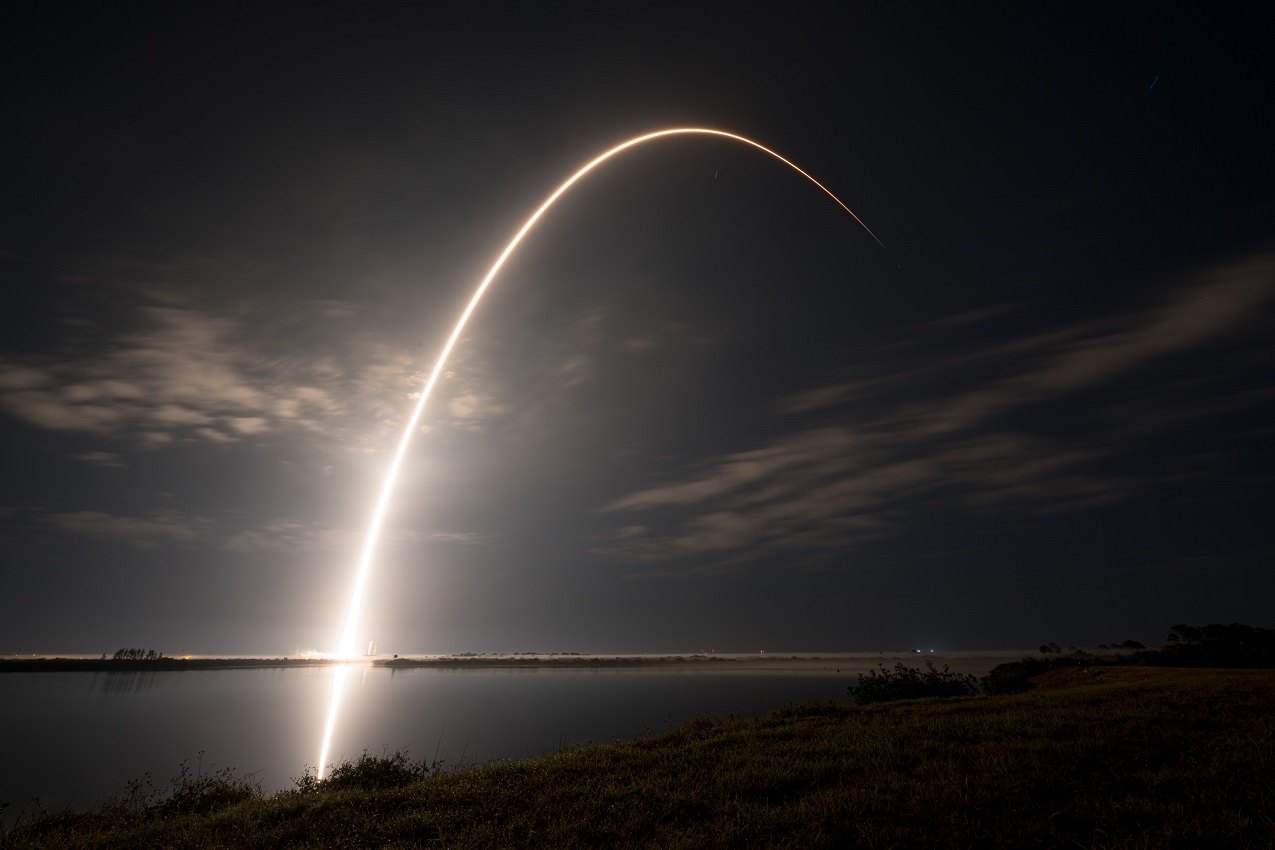
Saturday, February 18, 2023

Me Me Me Meeeee

Since the usual space beat is a bit slow, I thought I'd do an update on life in general.  So, yeah, this is going to be a me me me meeeee post, and I haven't really done one since my surgery back at the end of January.  Let me throw in an update on the rest of life that I haven't talked about since the day before Thanksgiving.  In fact, let me start there. 

While I've never been given a formal diagnosis of Benign-Paroxysmal-Positional-Vertigo, or BPPV, as Aesop and several other folks commented to that post I've assumed that's what it is.  I'm right around three months since the accident that caused it and while the day to day problems are at least an order of magnitude better, they're not quite completely gone.  There are still motions I go through or positions that I get into that cause it more than others, but none of them cause that reflexive eye twitching (nystagmus) that seems like a control loop trying to orient itself by finding horizontal and vertical.  That was pretty much gone by the time of the surgery, Jan. 26, but there's a better story about that I'll get to in a minute. 

The recovery from surgery has gone as well as I could have hoped.  I left the hospital that Friday with a handful of prescriptions, a pain concoction (a seriously revolting tasting syrup - I suspect being intentionally revolting to discourage use), two different medications for spasms in the area, and an anti-nausea drug that Mrs. Graybeard used while getting chemotherapy.  Once or twice, I tried the "use this one first" drug for esophageal spasms since I had some pains that weren't responding to anything but a heating pad, but they didn't respond to that drug either and they went away within another couple of days.  I was completely off the meds within a week of the surgery.  

Part of the advice for the hernia surgery recovery is to eat smaller meals; I quickly found that wasn't optional.  I simply couldn't eat what I was used to.  While it has gotten closer to normal, it's still not quite there, but that's fine.  An element of physical therapy for this repair is to eat; the instructions say a couple of bites every couple of hours.  The hard part there is remembering, because if I'm not hungry, I don't think about eating.

The fun story is that when I woke up from the anesthesia the afternoon of the surgery, I felt less dizzy than I thought I did the day before.  The argument for keeping you overnight is partly to ensure the anesthesia doesn't leave you dizzy and, of course, was something all the nurses wanted to ask me about.  I got some funny looks when I told them I thought I was less dizzy than before the anesthesia.  There are a couple of possible reasons for this; the more likely one is that it's my body's own weird reaction to the anesthesia.  The other is that when I was under the anesthesia, they put my head in a position like the Epley maneuver that's used to treat the BPPV and unintentionally had a positive effect on me.

I had a followup two weeks after surgery (2/9) and was expecting to get the next followup on 2/23, which is an easy date to remember, if nothing else.  Based on how I was doing at the one month followup, it was moved to 3/9.  I'm still restricted to not lifting over 20 pounds, and since I have no idea what a bad outcome of lifting things would look or feel like, I'm respecting that.  Except for carrying my wooden stepladder into this room last week to change a "dead LED" light bulb.  And maybe one or three other little things.

Meanwhile, since I hadn't been able to ride a bike since Thanksgiving, I started riding my indoor trainer right after New Year's.  I took off the two weeks between surgery and the first followup, but since now it's pretty much activity as tolerated, I went back to riding indoors the day after that (Friday the 10th).  I have always found riding indoors horrifically boring, but ignoring that, the questions center on how comfortable I can be riding outdoors.  That's probably going to be a real question in a few weeks.  My balance hasn't been an issue on the indoor trainer, but I can sense it's better now than at the start of January.  Not riding outdoors until my 3/9 checkup is probably prudent.


Friday, February 17, 2023

Weekly Small Space News Story Roundup

While I do these little summary stories once a week or so, it's rarely more than once a week, maybe it's time for a number in the title?  I wonder.

From the "I can't say I'm surprised" file:

SpaceX matches the rest of the world in tonnage to space.  In its Q4 2022 briefing, BryceTech reported that SpaceX lofted 142,330 kg into orbit during the fourth quarter of last year. China's space program was in second place, with less that half of that mass: 69,900 kg.  China, in turn was followed distantly by NASA, Roscosmos, and Arianespace. SpaceX's cumulative total, mainly Starlink satellites, nearly matched the cumulative total of all other space agencies and companies in the world.

In response to news about this, SpaceX founder Elon Musk replied that SpaceX intends to nearly triple its mass to orbit this year. "This year should average around 400 tons (400,000 kg) of useful mass to orbit per quarter," he said. Presumably this means not just an increase in the cadence of Falcon 9 launches, but also some operational Starship missions toward the end of '23 that begin to carry Starlink satellites.


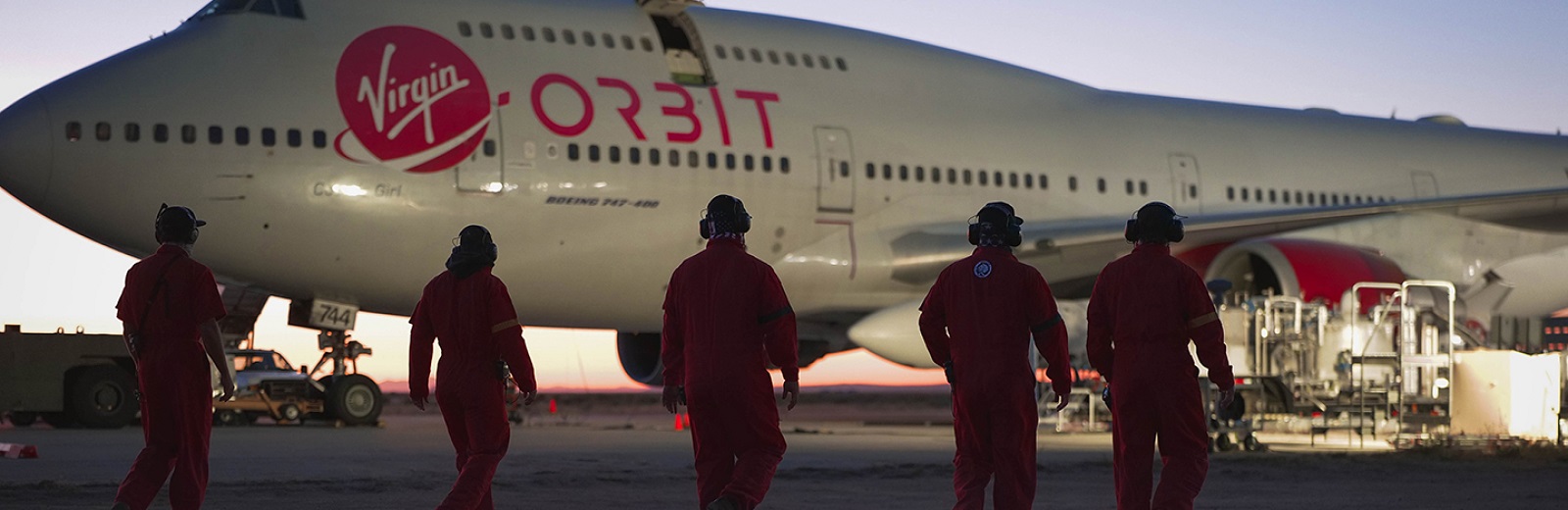
Virgin Orbit updated the failure analysis of their UK mission that didn't make orbit.   This Tuesday, Virgin Orbit updated the status of their failure analysis on the mission they launched from the UK that didn't achieve orbit.  The last time I had any information on this was January 18, so a month to the day ago.  

The investigation team is utilizing a comprehensive fault tree, a very detailed timeline, and several other products to conduct the investigation in a rigorous manner. Key observations at this point in the investigation:

  • The data is indicating that from the beginning of the second stage first burn, a fuel filter within the fuel feedline had been dislodged from its normal position.
  • Additional data shows that the fuel pump that is downstream of the filter operated at a degraded efficiency level, resulting in the Newton 4 engine being starved for fuel. Performing in this anomalous manner resulted in the engine operating at a significantly higher than rated engine temperature.
  • Components downstream and in the vicinity of the abnormally hot engine eventually malfunctioned, causing the second stage thrust to terminate prematurely.
  • The early thrust termination ended the mission, and the second stage and its payloads fell back to Earth, landing in the approved safety corridor in the Atlantic Ocean.

A fuel filter.  I'd say it's the kind of part that just doesn't attract attention; ordinarily they just do what they do and nobody ever notices them.  Until they don't.

Virgin Orbit's Boeing 747 Cosmic Girl, used to carry their Launchers' upper stages beyond the densest part of the atmosphere.  Virgin Orbit photo.


The first launch of Japan's H3 heavier lift rocket was aborted (video) early on February 17th (1:37 UTC or 10:37 AM local time) shortly after main engine ignition but before liftoff.  The liquid-fueled main engines ignited but the strap-on solid rocket boosters did not.  At just over 25 hours since the malfunction, there are no more updates.

Like its predecessor from 2001, the H2-A and the H2 before that, the H3 is built by Japan's Mitsubishi Heavy Industries, a private sector contractor.  For more background on the vehicle and its long trip through development see this Ars Technica article.


Thursday, February 16, 2023

Did The USAF Shoot Down a Ham Radio Balloon?

There's a story going around in the halls of radio geekdom (the SDR radio monitoring circles) that one of the unidentified objects that the Air Force shot down last week was a ham radio balloon.  It's all circumstantial evidence, but that evidence all fits and sounds believable.  

First, I need to do a little background information and introduction to the acronym salad that's inevitable here. 

Sending remotely operated or semi-autonomous balloons on otherwise random trips has become another of the hundreds or thousands of sub-hobbies in ham radio.   Large amateur radio balloons, carrying more than four pounds that are launched in the USA require FAA clearance, need a radar reflector attached, and usually continually transmit APRS telemetry before naturally popping and falling back to earth after a few hours, just like a weather balloon.  APRS in this sense is the Automatic Position Reporting Service that uses what hams refer to as packet radio to transmit a radio's location at regular intervals; because of its dependence on packet radio, you'll see that acronym translated as Automatic Packet Reporting Service.

I'm guessing that because of the FAA requirements for the larger balloons, a sub-sub-hobby got started referred to as pico balloons (literally a billionth of a balloon - but in this case, a small balloon).  These are generally the helium-filled, Mylar balloons you might get for a birthday party and carry small, solar-powered payloads that are only a few grams in weight.  These can generally be launched from anywhere without FAA approval.  What for?  Another amateur radio mode that's currently in wide use is called WSPR, for Weak Signal Propagation Reporter.  

WSPR was invented to allow stations to transmit a weak signal on recommended frequencies in any of the different amateur bands so that anyone can see at a glance if a band they're interested in is "open" to some part of the world.  The transmit power is at the discretion of the operator, so some guys will send milliwatts and others will send several watts.  The idea started as a beacon network, where stations around the world transmitted on a schedule and reported what they heard to the internet.  Similarly, one can transmit a WSPR "ping" from their station and look up what other places heard their ping.  A pico balloon can carry a small, low power transmitter and GPS receiver, with a small solar cell array, and by using the WSPR network, determine where the balloon is.  A well-designed pico balloon can drift around the world several times and its path mapped.  As you might expect there are clubs like the NIBBB, where the hams who want to do this hang out and help each other. 

Which brings us to what may be the News Story of the Year:

There is speculation that at least one of the objects shot down over Canada, Yukon by a US Air Force jet may have been amateur radio pico balloon K9YO-15 which was launched from Illinois on October 10 2022. It was on its seventh circumnavigation of the globe after being aloft for 123 days. 

What RTL-SDR reports is that this was a silver mylar 32" spherical balloon, similar to or even exactly this one from balloons.online.  The payload was a GPS module, Arduino, SI5351 clock generator used as a WSPR and APRS transmitter and a solar panel, all together weighing 16.4 grams.

The K9YO-15 balloon ceased all WSPR telemetry transmissions while flying just below Alaska since Feb 11 00:18 UTC (just before sunset in Alaska when the solar panels would stop working).

By using NOAA wind models and the last known location by Alaska, K9YO-15 was projected to have been over Yukon when the US Air Force shot down the unknown balloon object at Feb 11 20:41 UTC (3:41 PM EST / 1:41 PM Yukon time according to Canadian Defense Minister Anand). Reports put the altitude of the shot down object at approximately 40,000ft (~12000 meters), which matches the projected ~11500 meters of K9YO-15. Based on the previous days transmission times, it is suspected that if it were operational, the balloon would have begun transmitting again sometime later in the Yukon afternoon when the sun was stronger, but no transmissions have been seen.

The last reported position from K9YO-15 is indicated by the yellow triangle, with the projected path shown.  The balloon was at the black star, closest to an uninhabited Alaskan island called Hagemeister island, when this forecast path was created. 

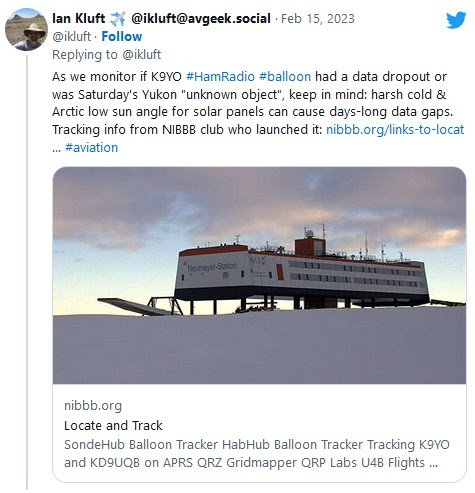
The yellow star works out to be around the Yukon cities of Dawson City and Mayo.  The area is being searched, but nothing has been found.  It's a big area and the K9YO-15 balloon is small; if it was blown up by some sort of weapon, the debris is going to be even smaller than that 36" balloon linked to above.  Over on Twitter, @ikluft (KO6YQ) reported on this speculation, and kept monitoring for K9YO-15 for several days.  Yesterday, he tweeted that while the balloon hadn't been heard for days, that's not unexpected in the long, dark winter nights of the arctic. The NIBBB club officially lists the balloon as "missing in action."

There's a mental picture that goes with this all; a handful of ham radio pico balloons around the world getting tracked down by the most advanced militaries in the world and shot out of the sky.  Reading around shows a cost for these missions to take out a $50 ham project as between 1 and $2 million.  Burning that as dollar bills would be more useful; at least you could get warmed by the fire or make some coffee or something. 


Wednesday, February 15, 2023

SpaceX Sold Off Their Offshore Launch Platforms For Now

Although I'm just reading about it now, this seems to be a bit of old news.  It has to do with the two half-billion-dollar offshore oil platforms that SpaceX bought back for just $7 million in mid-'20 and renamed Phobos and Deimos, after the two moons of Mars.  Around the same mid-20 time frame, CEO Elon Musk tweeted that SpaceX was “building floating, superheavy-class spaceports for Mars, moon & hypersonic travel around Earth.”  In reality, the company has done very little to Phobos or Deimos. Phobos’ deck was half-cleared in fitful bursts of work, but Deimos was left almost untouched. 

Early this week, a commenter on NASA Spaceflight.com said that the two were scheduled to leave the port in Pascagoula, Mississippi that they have been languishing in for unknown destinations.  That's when it became known that SpaceX had sold the two platforms. 

In an article from SpaceNews, we find some more interesting background information:

However, SpaceX President Gwynne Shotwell told reporters after a presentation at the Federal Aviation Administration Commercial Space Transportation Conference Feb. 8 that the company had sold the rigs after concluding they were not suited to serving as launch platforms.

“We bought them. We sold them. They were not the right platform,” she said. She didn’t disclose when SpaceX sold the rigs or to whom.

Shotwell said the company needed to first start launching Starship and better understand that vehicle before building offshore launch platforms. “We really need to fly this vehicle to understand it, to get to know this machine, and then we’ll figure out how we’re going to launch it.”

That last part, about needing to first start launching Starship and really get to know it before committing to a specific offshore platform with very specific modifications is almost a "well, duh!" moment, it's so very logical and reasonable.  Another addition to the list of times I think Shotwell made or is making the right call. 

Perhaps even exceeding CEO Elon Musk’s infamously lofty ambitions, Shotwell said that SpaceX has “designed Starship to be as much like aircraft operations as we possibly can get” in the hopes of enabling “dozens of launches a day, if not hundreds of launches a day.” No rocket family in history has launched more than 61 times in one calendar year, making Shotwell’s Starship cadence target hundreds or even thousands of times more ambitious than a 1980s rocket record that’s still standing four decades later.

May I point out that the historical record of 61 launches in one calendar year was set by the Soviet Union in 1980 and was tied for the first time last year by Falcon 9?   Oh, and the Russians needed to launch that R-7 rocket 64 times to get 61 successes, while Falcon 9 (including two Falcon Heavy launches) had 100% successes.  Even one launch per day would be record shattering, let alone "dozens... if not hundreds of launches a day." 

Let's not yet get into pondering whether the US Fed.gov agencies would allow that many launches.  SpaceX fought long and hard to receive approval for up to five orbital Starship launches per year from Boca Chica, Texas.  They also have approval for up to 24 Starship launches per year out of the Kennedy Space Center pad "just up the road."  24 Starship launches per year?  I can hardly wait!  I'll have to drive up closer to the pad to watch one of these.

One of the two oil platforms.  Poking around a few links, this appears to be the one called Deimos.  NASA Spaceflight.com photo by Jack Beyer. 


Tuesday, February 14, 2023

Blue Origin Quietly Announces Major Research Success

On Friday, in a blog post that wasn't promoted by press release or Twitter announcement,  Blue Origin quietly said its "Blue Alchemist" program has made both solar cells and the wires to transmit their electricity from simulated lunar soil made to be chemically and mineralogically equivalent to lunar regolith.  The blog post opens with a photo of a working solar cell, made by their prototype hardware, and below that photo says, 

Since 2021, Blue Origin has been making solar cells and transmission wire from regolith simulants.

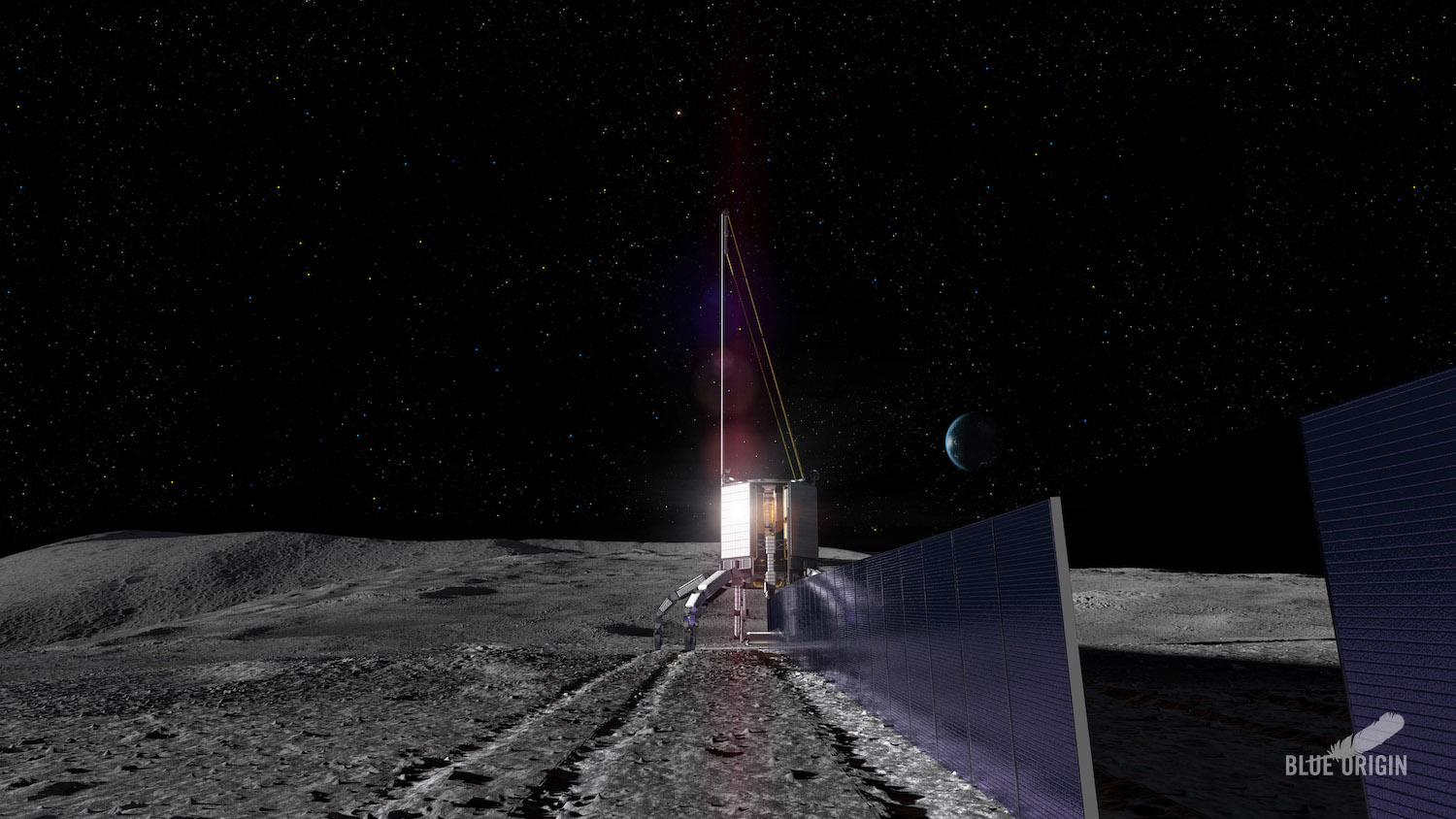
Making self-sustaining lunar colonies has been talked about for decades.  All of the key ingredients for solar cells are present in the rocky and dusty regolith on the surface of the Moon—silicon, iron, magnesium, aluminum, and more.  While this particular announcement doesn't talk about many details, they include a conceptual illustration that implies a machine is envisioned that could manufacture large solar panels in one continuous process, practically making a wall or paving the lunar surface around labs or colonies with solar cells. This image shows what I interpret as one of these Blue Alchemist modules seeming to produce a wall of solar cells.  Blue claims the lunar factories can scale indefinitely, eliminating power as a constraint anywhere on the Moon.

"Once demonstrated and implemented on the Moon, Blue Alchemist will put unlimited solar power wherever we need it."  Blue Origin image.

Solar power in, solar power generation out.  

How can it work?  Like all metal extraction from ores that many of you are familiar with, the first step is that the regolith has to be melted into flowing rock and then the molten rock has to have the elements separated out, which Blue Alchemist apparently does by changing the melt temperature while electric currents push the metals to the desired electrode to be collected, in a process called "molten regolith electrolysis."

We start by making regolith simulants that are chemically and mineralogically equivalent to lunar regolith, accounting for representative lunar variability in grain size and bulk chemistry. This ensures our starting material is as realistic as possible, and not just a mixture of lunar-relevant oxides. We have developed and qualified an efficient, scalable, and contactless process for melting and moving molten regolith that is robust to natural variations in regolith properties on the Moon.

Using regolith simulants, our reactor produces iron, silicon, and aluminum through molten regolith electrolysis, in which an electrical current separates those elements from the oxygen to which they are bound. Oxygen for propulsion and life support is a byproduct.

It seems there must be some sort of physical separation as well and each of the materials that go into making photovoltaic solar cells must be processed beyond this.  Silicon crystal growing is a mature industry and I'm sure much can be learned from veterans of that industry. They note that they purify the silicon crystals to 99.999% pure, necessary for solar cells.  Maybe even more so than on Earth, the finished solar cells need to be coated with a layer of glass to protect them from solar wind particles and other harsh aspects of the lunar environment (yes, the elements to make glass are in the regolith, too).  Their solar cells are capped with glass and have life expectancy stated as 10 years.  The result:

A working solar cell produced by their Blue Alchemist processes.  Blue Origin photo.

Blue Origin is apparently going to attempt to market the technology to NASA for use by its Artemis program to return humans to the Moon in a "sustainable" way.  One of the mission statement-like quotes we hear from NASA about Artemis "returning to the moon to stay," presumably to differentiate Artemis from the Apollo program.  This technology could absolutely help enable longer missions by improving the conditions for long stays on the moon. 

"Although our vision is technically ambitious, our technology is real now," the company said in its blog post. "Blue Origin’s goal of producing solar power using only lunar resources is aligned with NASA’s highest priority Moon-to-Mars infrastructure development objective."

An important big step toward stepping off the home planet.    

EDIT 02/14/23 10:35PM EST:  Left out the bold-faced word in the sentence about glass coating solar cells: "...need to be coated..."


Monday, February 13, 2023

Strange New Starship Appears on Test Stands

On Sunday the 12th, Starship SN26, a totally different type Starship than any we've seen before was rolled to the test area from the shipyard.   Rather than describe it, let me show you: 

Photo by (Starship Gazer), used on Teslarati. 

The big, obvious differences are that there are no heat shielding tiles and there are no flaps - the four aerodynamic surfaces on every other Starship we've seen.  An obvious conclusion is that this is a non-reusable version like we talked about back on February 1st.  No Starship has ever been built to this configuration and tested before, so doing any sort of testing before installing the tiles and aerodynamic surfaces later seems out of the question.  

Three expendable variants of Starship anticipated for NASA's Human Landing System (HLS). SpaceX image.  Reused from February 1 post for convenience.

Those of you who are familiar with the "pez dispenser" for deploying Starlink satellites will note that's not visible either, although without the flaps to orient it in my mind, I'm not sure we're looking at the side it would be visible from.  

In fact, SN26 has no discernible payload bay.  The easiest explanation in my mind is the middle option: using it as a propellant storage tank in orbit to demonstrate refueling on orbit; that's something NASA has contracted with SpaceX to develop since 2019, and is going to be an integral part of many future missions - starting with Artemis.  To further bolster that view, in October 2022, a NASA official indicated that SpaceX’s second Starship test flight would be a “Starship-to-Starship propellant transfer.”  Since the first Starship test flight is very likely to be within the next 6 weeks, preparation for the second test flight seems to be the proper thing to be doing.  

It's not possible to know with the scant information we have, but the right hand illustration in that graphic of expendable Starship variants is the Human Landing System manned version that will land on the moon for Artemis, ferrying crews from the Gateway space station orbiting the moon down to the surface and back.  SN26 could the first HLS lander.  An experiment to land it on the moon would be beyond cool, and it has been rumored in the past that SpaceX plans to test the lunar lander on their own.

Eric Ralph at Teslarati points out that there's another flap-less, heat resistant tile-less prototype Starship in process in the Boca Chica Shipyard:  SN27.  Photos of SN27 have revealed the Starlink pez dispenser, so it apparently has a different purpose than SN26. 


Sunday, February 12, 2023

Another Russian Module Leaking at ISS

Remember way back on December 14 of last year, the fuss about a Soyuz module leaking?  There was discussion of whether they would need rescue by SpaceX on a Crew Dragon capsule.  The leak was found when two cosmonauts were preparing to conduct a spacewalk, and found their Soyuz MS-22 spacecraft had begun to leak uncontrollably from its cooling system.  Russian engineers eventually declared that a micrometeorite had struck the external cooling loop of the spacecraft, and deemed it unsafe to fly home. A replacement Soyuz will be sent up to replace that one, giving a ride back for the crew being rotated back home.

Today we find out that another spacecraft, a Progress supply ship, has been leaking from it's cooling system according to a statement from Roscosmos, the Russian Space Agency.  Both Roscosmos and NASA say this leak isn't a threat to the crew of seven on the ISS at the time.    

I think the second module having a leak in its cooling system probably puts the idea of both hits being micrometeorite impacts off the bottom of the probability scale.  One micrometeorite?  Sure.  Two?  What are the odds of 1?  These have to be independent events, so small probabilities become vanishingly small when they're multiplied.  That said, I know nothing about the construction of a Soyuz vs. a Progress module and how similar they might be in that aspect of design.  There are reports, though, that some preliminary data was received from the Progress vehicle that indicated a similar cooling system issue. External cameras showed flakes moving away from the Progress vehicle—frozen coolant—similar to that observed with Soyuz MS-22.

Roscosmos said Saturday the Progress incident "will have no impact on the future station program." This is likely true for Progress MS-21, at least. The spacecraft already has been packed with trash and other material to be removed from the station, and was due to leave next week, burning up in Earth's atmosphere during reentry.

However, it seems too early to make such a conclusion for future missions. A critical question is what caused the depressurization event observed Saturday.

My imprinting on the Russian way of their space efforts has been that if something works well enough, they put no more effort into designing a newer and possibly better way of doing its job.  Look at their Soyuz capsule, which has been flying since the 1960s.  It's entirely consistent to think someone might have said the cooling system on Soyuz is well-established design, let's just copy that.  

Final words to Eric Berger of Ars Technica because I like the way he puts this together.  

A few hours after the Progress depressurization Saturday there are more questions than answers, but none of this will comfort NASA as it partners with Russia to continue operating the space station. This latest Soyuz and Progress failures are just two in a long line of recent issues, including the Nauka module's misfiring thrusters in 2021, a Soyuz booster failure in 2018 that forced Aleksey Ovchinin and Nick Hague to make an emergency return to Earth, or another leaky Soyuz vehicle.

These are the kinds of problems that one might expect from a space industry in Russia that is reliant on aging infrastructure, aging technology, and quality control issues due to inadequate budgets.

An earlier Progress module departing the ISS, not the ones mentioned in the article.  NASA photo.


Saturday, February 11, 2023

Why Would Any Country Want a Balloon Now?

Today, the US apparently shot down another ... something ... over the north Alaska/Western Canada region.  What's going on?  Is this something new?  More to the point, in this era of spy satellites that can read the license plates on cars from orbit, or listen to small radios like your cell phones, why would anyone go to balloons and other low-tech things like that?  

From my perspective, the answer is a simple truism I've quoted many times: physics is a bitch.  There is nothing that a spy satellite can do that a drone or balloon or something in the atmosphere can't do better for a tiny fraction of the price.  Put another way, any instrument that could be used on a satellite can be made smaller, lighter and cheaper, while returning better quality observations if it can fly at airplane altitudes.  

It's difficult for me to put actual numbers here for a few reasons, but the trends that are important are easy to spot and describe.  Let's start with optical resolution, the ability for that telescope looking down to resolve two objects.  The distance they're apart as an angle can be calculated by the separation you want to resolve and the distance to the magnifying optic (mirror, almost without exception).  The resolution angle you want is given (in radians) by the separation you want resolve divided by the distance from the optic, 

Let's say you want to read letters 2" square from 400 miles - about the altitude of the Hubble Space Telescope's orbit. That's an angle of 2" divided the number of inches in 400 miles, or 2/25,344,000 (inches cancel) or 78.9 nanoradians (78.9*10-9 radians).  Which works out to be 0.0163 arcseconds.  

The required telescope diameter to achieve that sort of resolution is big.  Probably too big for a spy satellite.  You can calculate how big by using information like this:

Lambda is the wavelength of light, and a commonly used value here is 550 nanometers, the color of a nice blue green light.  It turns out that using the equation on the left, the size mirror to resolve two inches is 8.544 meters diameter.  That's a big telescope; 336 inches diameter.  Until fairly recently, that would have been the largest telescope in the world. 

If we reduce the height from 400 miles to balloon height, let's say 11 miles (close to that 60,000 foot level we read about last week).  That shrinks the telescope to a 9.2" aperture, taking it from among the largest in the world to something like this that hundreds or thousands of amateur astronomers own.  

Another way of saying all this is that any telescope will out perform the same size in an orbiting satellite by the ratio of their heights.  400/11 miles is 36.3636.  Divide that 336" scope derived for 400 miles by that 36.3636 and get 9.24".  

The argument for smaller telescopes is pretty strong.  Or even a fleet of smaller telescopes that can be deployed and recovered after their missions.   

A similar kind of argument can be made for radio monitoring and any system that you put up being made more sensitive by being at a lower altitude.  A commonly used relationship for calculating free space path loss uses the expression:

dB = 37 dB + 20log(f) + 20log(d)

Here, f is the frequency in MHz and d is the distance in miles.  Since we don't know a frequency, let's just pick the same for both, I'll use 1000 MHz, and calculate for 400 and 11 miles.

For 400 miles, loss is 149 dB. 
For 11 miles, loss is 118 dB.

Antenna gain is easy compared to optical, but that difference of about 30 dB more sensitive means about 1000 times more sensitive.  Again, it seems like an obvious conclusion that the lower radio can outperform anything in orbit.  The satellite might be able to compensate for that 31 dB greater losses to orbit with a bigger/better antenna, but gain like that definitely can cost.


Friday, February 10, 2023

Small Space News Story Roundup

As I frequently do, a summary of some short news stories that hit my general interest buttons.


CNBC Reports that last year was a record year for rockets launched from the US and the regulatory agency that's responsible for gumming up things coordinating those operations, the Federal Aviation Agency, is struggling with the overload.  The agency coordinated US airspace for a record-breaking 92 space missions in 2022, up 33 percent from the year prior, and it expects to top that this year.  As I'm sure you know, 61 of those 92 were SpaceX's record year, and this year they're aiming for 100 launches.  Even if SpaceX doesn't make 100, but gets close, the FAA could be looking at more than 60% more launches.

It didn't take long for the number crunchers to realize that the problem area is Florida for two big (and actually pretty obvious) reasons: there are more launches from Cape Canaveral than any other launch facility in the US and the state is also a major tourist destination with big theme parks in many places, plus hundreds of miles of beaches and other natural attractions.  Compound that with our summer thunderstorm season that delays and re-routes flights routinely as well as the couple or few times in the year that hurricanes or tropical storms shut down swaths of the state.  This led to clashes, such as when the FAA had to talk NASA out of Artemis I launch attempts around the Thanksgiving holiday. 

SpaceX launches from both Vandenberg Space Force Station in California and Cape Canaveral SFS in Florida.  Of the 31 launches that weren't SpaceX, most were also from those two facilities, with four launches from Texas, as well as one from Kodiak Alaska and two from Wallops Island, Virginia.   

(Hat tip for this story to Edition 5.25 of Rocket Report)


Do you think that Blue Origin's New Glenn rocket will be operational in a bit less than two years?  Does it matter to you that they've apparently worked the bugs out of the BE-4 engines and are building the first test vehicle?  

Regardless of what you and I might think, NASA has awarded Blue Origin a contract for a pair of Mars orbiting satellites to launch in the next closest launch window coming in the fourth quarter of 2024.  That's more like 1-3/4 years from now than two years.  The mission is another one of those names almost legally required to be a cutsie acronym; in this case, the mission is ESCAPADE, short for Escape and Plasma Acceleration and Dynamics Explorers.

ESCAPADE is slated to study the magnetosphere, the magnetic zone of the Red Planet's atmosphere, with twin craft designed by Rocket Lab. Two Mars-orbiting spacecraft will look at how the solar wind (charged particles from the sun) tore away the atmosphere over eons, thinning it considerably. 

Mission results could allow scientists to learn more about how the planet got so dry over time, as billions of years ago it appears Martian water flowed abundantly on the surface.

Yes, designed by Rocket Lab, probably better known for launching their Electron booster for small satellites.  They also advertise as building satellites on their web page.  As has been the case several times with missions we've covered, this is part of NASA's Venture-Class Acquisition of Dedicated and Rideshare (VADR) program; a short list of 13 companies formulated in 2022. Financial details of Thursday's contract were not released by NASA. 

Illustration of the ESCAPADE spacecraft in orbit around Mars. Image credit: Rocket Lab USA/UC Berkeley)


Thursday, February 9, 2023

Not Perfect, But Success!!

This afternoon's static fire of booster B7 was deemed a success despite a couple of engine issues that might have mattered in an orbital launch (depending on the payload).  Elon Musk tweeted:  

There are good videos both at Musk's account - a view from a drone overhead - and SpaceX's official account, which has a long video from a different perspective.  I'll bet there are more, and probably more still as time goes by.

Note that if you go to the longer video, the action occurs well after the 7 minute mark in a 13:12 minute video.  Like this:

When the video starts, the first seven minutes are with their countdown clock at T-40 seconds and holding, until just before this screen capture image.  

What does it mean?

For starters, it appears the things that people were worrying over were fine.  Things like the Orbital Launch Mount surviving and the concrete under the engines not going flying.  Was this the most powerful rocket in human history?  Possibly, but we don't know.  There were 31 engines firing today, which set a new record, breaking the existing record of 30 from the old Soviet N1 from the late '60s early '70s.  The N1 never successfully made orbit, but it set the record for the most thrust produced by a single rocket, generating up to 4500 tons (9.9 million lbs) of thrust at liftoff. 

Could Starship have exceeded that 9.9 M lbs of thrust?  Absolutely.  Divide that by 31 engines to find each engine only had to produce a little over 319,300 lbs and the Raptor 2 is capable of producing over 500,000 lbs.  If the engines were set to 64% of throttle, they would have produced more thrust than the N1.  Seems pretty likely they did this, for at least some of the five or six seconds they burned.  We just haven't been given those numbers.  The engines can be set lower than 64%, though, as low as 40%, so we just don't know.  

Except for one unofficial tweet by Former SpaceX executive Tom Mueller, the so-called Father of  the Raptor, who congratulated the team for breaking the world record for the most thrust from a single booster.

So now what?  

During her talk at the FAA's Commercial Space Transportation Conference mentioned yesterday, Gwynne Shotwell said the big picture is to analyze all of the results from today and proceed with the task of getting into orbit.  She said that it was reasonable to expect a launch by the end of March.  Since Shotwell doesn't seem as prone to giving overly optimistic lead times as Musk, that's probably very reasonable.  Not Elon Standard Time.  Not a NET (No Earlier Than) date and maybe not NLT (No Later Than), just a reasonable estimate.   


Wednesday, February 8, 2023

If You Have Time Thursday

Park a browser tab or window on your favorite Boca Chica monitoring cameras, NASA Spaceflight or Lab Padre - or whatever you choose.  We have word that SpaceX is aiming to do the 33 engine static firing we've been waiting for for a couple of years.  Road closure from 8AM to 8PM CST; I wouldn't bet hard on them doing it very early in the day but they've done it before.  In the 12 hours, they have a lot of time to work and overcome issues that might come up.

It started with this email a couple of hours ago:

A few comments into their poll this appeared:

I'm sure the comment is referring to Gwynne Shotwell, SpaceX COO, since she's in charge at Boca Chica, and the commenter just didn't know how her name.  On the Lab Padre live cams, they run a longer note explaining she announced that at the CST conference - presumably the Commercial Space Transportation Conference going on this week in Washington, DC. 

Boca Chica Mary, who photographs for NASA Spaceflight, posted a tweet showing the Overpressure Notice to the village residents there outside the Shipyard gates.  Another user tweeted the Marine Safety Information Bulletin (MSIB) for the testing.

It looks like all the indicators are as positive as we get. 


Tuesday, February 7, 2023

Relativity Space Stacks First Terran 1 On Launch Pad

Relativity Space announced on the 6th that their Terran 1 3D printed rocket had gone vertical at SLC-16 on Cape Canaveral SFS, and was undergoing final testing to ensure it's ready for its first orbital mission attempt.  While no launch date has been officially announced, they're apparently very close to being ready and the last time we heard much from them they said, “The next time Terran 1 is out on the pad, it will be stacked and vertical. Upcoming milestones to track: rollout, static fire, and launch.”  It seems possible they could launch before the end of February. 

Twitter screen capture. 

The ~110 foot tall Terran-1 is a said to be 85% 3D printed by mass, and they're looking to increase that to closer to 95% in following missions; in fact, it has been said that the company itself is probably best thought of as an additive manufacturing company rather than just a rocket manufacturer.  As of now, they describe Terran-1 as, "the largest 3D printed object to exist and to attempt orbital flight."  

I've mentioned Relativity in the past in the context of being a contender in the race for the first one-metric ton payload rocket to orbit.  Another race they're a contender in is to be the first liquid methane/liquid oxygen rocket to achieve orbit.  Methane-oxygen (or methalox) engines are widely considered to be The Next Big Thing in rocketry, but while a couple of the big names have methalox engines (Starship, Vulcan and New Glenn), nobody has flown one into orbit yet. 

It's important to note that Relativity Space is using Terran-1 to develop a larger, more powerful, more reusable version called Terran-R.  Oh, by the way: the first mission of the Terran-R is currently written in as totally private mission to Mars.  In the next launch window, which will be in the last quarter of 2024.  As in a couple of months less than two years from now.

In a comment to this photo from the previous Twitter post, a user noted that it was quite different to see the printer layer lines that those of us who use home-level 3D printers are used to seeing on our prints on something as high-tech as an orbital rocket.  Now that I've noticed them, I see them all the time.  Almost top to bottom.


Monday, February 6, 2023

As Close to a Promise as We Can Get

Space.com reports on a couple of tweets from Elon Musk over the weekend which strongly imply that the goal for the first orbital flight of Starship is in March.  That's not a surprise, but it's as close to a promise as we're able to get.  

"If remaining tests go well, we will attempt a Starship launch next month," Musk said via Twitter on Saturday (opens in new tab) (Feb. 4). "Success is far from certain, but excitement is guaranteed," he added in another tweet (opens in new tab), this one on Sunday (Feb. 5).

The design economics for Starship are so revolutionary that it simply changes everything.  It makes interplanetary travel much more feasible, for both cargo and people.  It literally could mark the beginning of mankind as an interplanetary species.  

None of this is news to people who have been following the tests and refinements going on at Boca Chica as long as we've been able to.  I'm pretty confident all regular readers here know the record of Starship suborbital hops - the most recent was May of '21, almost two years ago - and you'll know that both Booster 7 and Ship 24 have had a number of static firings.  The largest number of engines fired on Booster 7 was 14 engines fired back on November 14th, briefly making it the most powerful rocket on Earth.  Ship 24, meanwhile had static fired all six of its engines two months before. 

We all know that before the first attempt at orbit, a major milestone is to static fire all 33 boosters on B7, we just don't know when we'll get to see that.  Road closures are scheduled for the rest of this week, from 8AM to 8PM everyday, but that was true for today as well.

B7 & S24 on Monday, Jan. 23rd "full flight-like WDR."  SpaceX photo.

There are rumors that the launch site deluge hardware we talked about in the last couple of weeks is being worked into place before the full static fire, but I know of no hard data to back that.


From the Just for Fun department.  Today is the fifth anniversary of the first Falcon Heavy launch  The launch that lifted Elon's personal Tesla into a Trans-Mars trajectory, where it now resides.  


Sunday, February 5, 2023

Update on ULA's Vulcan First Flight

With United Launch Alliance's first Vulcan Centaur on the Cape Canaveral Space Force Station for two weeks,  it's pretty easy to wonder when the first mission will take place.  The mission, called Certification-1, has been known for quite some time and the major pieces have been moving toward launch for years.  It's intended to deliver two demonstration satellites for Amazon's Project Kuiper internet constellation into low Earth orbit.  It will also place the Astrobotic Peregrine commercial lunar lander in a highly elliptical orbit more than 225,000 miles (360,000 km) above Earth to intercept the Moon, and carry a Celestis Memorial Spaceflight Payload beyond the Earth-Moon system to orbit the Sun forever.  Ars Technica did an exploration into flight readiness this past Friday, and is rather more pessimistic than my "No Earlier Than mid-March" idea I've voiced a couple of times. 

One of the issues is the Peregrine commercial lunar lander.  

Last week, Astrobotic announced that its Peregrine lander had successfully completed its entire flight acceptance campaign. "Peregrine is now ready to be shipped to Cape Canaveral, Florida when Astrobotic’s rocket provider, United Launch Alliance, gives the green light to receive it," the company stated. This was important news—except it didn't quite tell the whole story.

This release made it sound like Astrobotic simply needed to ship the lander from Pittsburgh to the launch site, where it would be installed on the rocket. However, the lander's engines, which have been undergoing extensive testing in White Sands, New Mexico, are still not ready for flight and are not yet attached to the lander. The company plans to complete the integration of the engines onto the lander at the launch site in Florida.

Since those engines are pretty much "do or die" to a lander's mission, suffice it to say Peregrine isn't going anywhere until those engines are certified and installed on the lander.  

To add to that, the day before the Ars Technica article NASA changed Peregrine's landing site to one considered more scientifically interesting.  

NASA announced Feb. 2 the Astrobotic’s Peregrine mission, flying payloads for the agency’s Commercial Lunar Payload Services (CLPS) program and other customers, will now attempt a landing near a region called the Gruithuisen Domes on the northeast edge of Oceanus Procellarum, or Ocean of Storms, on the western part of the moon’s near side.

Let's assume that the change of destination only has either a minor impact or no impact on a probe this far along in design.  Other than any delay that change might introduce to choice of launch times, or changes to the payload processing, it should have no effect on the Vulcan Centaur itself.  That doesn't remove any other problems/obstacles to getting that mission accomplished. 

There are other timing constraints as well. United Launch Alliance has a very important upcoming launch for NASA and Boeing. About a week ago, NASA confirmed that the first crewed flight on Boeing's Starliner spacecraft will launch on an Atlas V rocket in April. Because United Launch Alliance's Atlas V and Vulcan rockets will share a launch pad at Cape Canaveral, Space Launch Complex-41, this critical human spaceflight will probably take place before Vulcan.

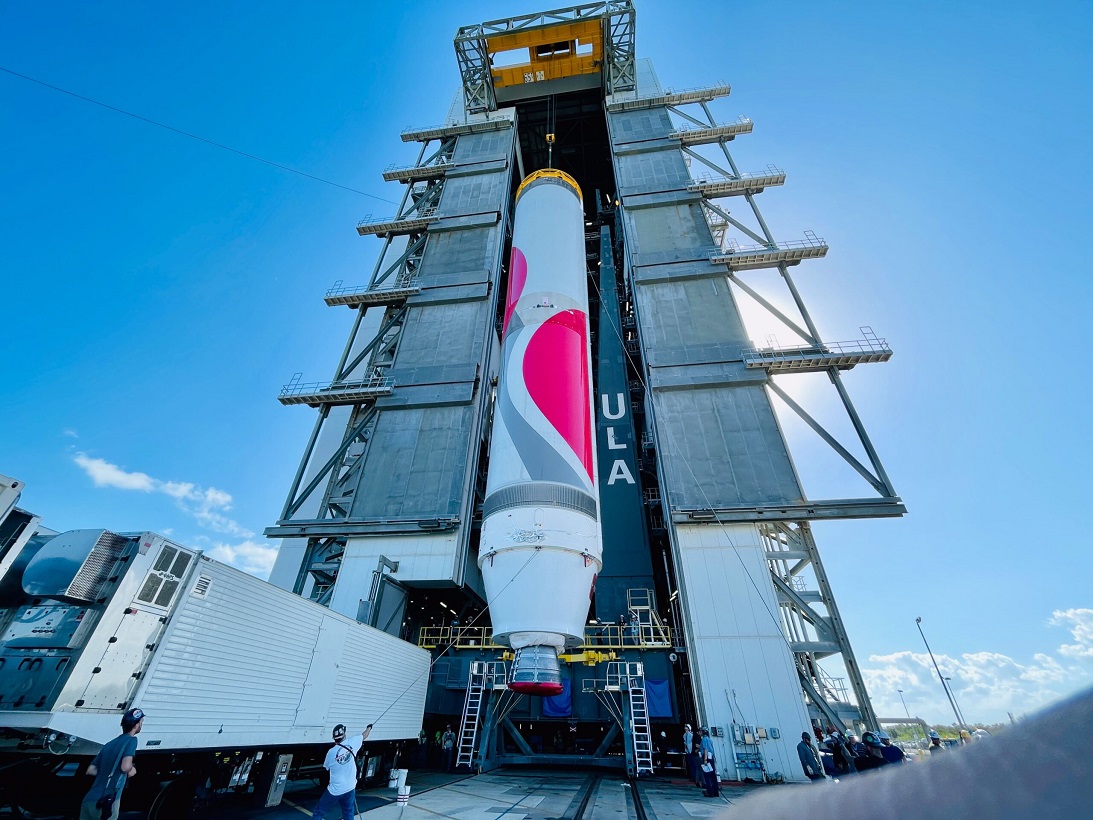
Vulcan's core stage is lifted into a processing facility at Cape Canaveral, Fla., in January.  Image credit United Launch Alliance.

With all of this put together, assuming the Boeing Starliner does get priority over Certification-1, it seems safe to assume that the Vulcan mission will be no earlier than mid to late April.  Eric Berger at Ars Technica says NET May.  The readiness of Peregrine, Starfire, the Vulcan itself, and everything else can push that farther than May.


Saturday, February 4, 2023

ChatGPT Fastest to 100 Million Users Ever - Too Bad it Sucks So Bad

Word got around this week that OpenAI's Chatbot software ChatGPT is the fastest growing program in Internet history, reaching 100 million users in two months of existence.  In that respect, it has been an online sensation, potentially influencing millions of users.

In a way, it's too bad the software is such a piece of crap when it comes to figuring out things.  That ends up making all of us old codgers who are warning that there's too much fuss over AI come across as wise old codgers.  All the talk about AI coming and that it's going to make everything better and usher in a new era of progress is just over-the-top marketing hype.

The article comes from a research piece done by National Public Radio, NPR, of all places and referred to in Ars Technica's weekly Rocket Report.  In short, AI might be able to transform some industries, just don't ask it anything technical, where being right is everything.  NPR put ChatGPT to the test with the help of actual, real, human rocket scientists to judge the AI application. It failed spectacularly.  

[Tiera] Fletcher is a professional rocket scientist and co-founder of Rocket With The Fletchers, an outreach organization. She agreed to review text and images about rocketry generated by the latest AI technology, to see whether the computer programs could provide people with the basic concepts behind what makes rockets fly.

The results were far from stellar. In virtually every case, ChatGPT – the recently released chatbot from the company OpenAI – failed to accurately reproduce even the most basic equations of rocketry. Its written descriptions of some equations also contained errors. And it wasn't the only AI program to flunk the assignment. Others that generate images could turn out designs for rocket engines that looked impressive, but would fail catastrophically if anyone actually attempted to build them.

Here we come to one of the key, fundamental problems with the ways these AI systems are programmed.  They're given tons of input to read, but have no ability to decide if things are higher priority or can't be changed at will.  They can't determine facts.  

"There are some people that have a fantasy that we will solve the truth problem of these systems by just giving them more data," says Gary Marcus, an AI scientist and author of the book Rebooting AI.

But, Marcus says, "They're missing something more fundamental."

They're missing knowledge of which things they read are rock hard physical law and which are more like suggestions, or that can be made secondary.  A simple example was that in addition to flubbing up "The Rocket Equation," the name of which implies it comes close to a complete description of how a rocket works, it flubbed up simple things like thrust to weight ratio.   

The strange results reveal how the programming behind the new AI is a radical departure from the sorts of programs that have been used to aid rocketry for decades, according to Sasha Luccioni, a research scientist for the AI company Hugging Face. "The actual way that the computer works is very, very different," she says.

A traditional computer used to design or fly rockets comes loaded with all the requisite equations. Programmers explicitly tell it how to respond to different situations, and carefully test the computer programs to make sure they behave exactly as expected.

By contrast, these new systems develop rules of their own. They study a database filled with millions, or perhaps billions, of pages of text or images and pull out patterns. Then they turn those patterns into rules, and use the rules to produce new writing or images they think the viewer wants to see.

ChatGPT gets good reviews for things that it has done in areas where there are no right or wrong answers; things more like poems or songs, rather than areas where the wrong answers might kill a bunch of people and destroy a mission costing many millions of dollars.  The "AI" is mimicking the pile of physics textbooks that it's been exposed to," she says. It can't tell if the mashed-up text it's produced is factually correct. And that means anything it generates can contain an error.  Until the need to produce right answers is more important than just producing an answer. it can't be trusted.

AI researcher Gary Marcus worries that the public may be radically overestimating these new programs. "We're very easily pulled in by things that look a little bit human, into thinking that they're actually human," he says. But these systems, he adds, "are just autocomplete on steroids."

"We need an entirely different architecture that reasons over facts," he says. "That doesn't have to be the whole thing, but that has to be in there."

If you do a search for "ChatBot" you generally come up with way too anthropomorphic images, like this one from Gludy.com. It's really absurd but people seem to prefer the anthropomorphic art rather than a picture of a text interface on a computer - or simply headphones and a microphone.  A real AI chatbot doesn't need a body that's designed to look like anything in particular, such as human or dog.


Friday, February 3, 2023

Odds and Ends, Short Points and Pointless

SpaceX, or at least the fan base, is celebrating their 200th successful Falcon 9 launch.  Thursday morning at 2:58AM, their Falcon 9 rocket was successfully launched for the 200th time. 

Falcon 9 has only suffered two mission-related failures in flight: one partial failure in 2012 and a catastrophic failure in 2015. Falcon 9’s 2015 failure entirely destroyed the rocket and its cargo-carrying Dragon spacecraft before they reached orbit. Its 2012 failure only doomed a secondary Orbcomm satellite payload, while the primary mission – a Cargo Dragon supply delivery for NASA – was technically successful. 

Thursday morning's launch Starlink Group 5-3, SpaceX Photo.


Over the last week or so, those of you who follow Tam (View From the Porch) will have noticed she referred to having Seasonal Affective Disorder (SAD) and was watching the change in sunset times. She finally found a day to celebrate, saying, “Sunrise before eight AM and sunset after six PM is a huge mood lifter for me.”  When the latest sunrises of the year slip to seconds then a full minute earlier, one can be confident in the knowledge that the days will continue to get longer and sunnier until July.  

While I know that SAD is real and I sympathize with those who have it, I've noticed that, if anything, I have the opposite reaction.  When I realize the days are getting longer and there's no going back to shorter and cooler days, I get saddened while people with SAD feel better.  It's like how I have the opposite of Attention Deficit Disorder: Attention Surplus Syndrome or ASS.  

I especially get that "downer" reaction when I realize there are no cold temperatures in the forecast and we're running out of chances for cold weather.  Like this 10-day forecast just taken from Weather Underground.

The lowest temperature between today and practically mid-February is 51F a week from Sunday morning.  That's not even cold for here.  That's just barely below average.  That means it's practically time to start spring planting, weeding and all that PITA stuff.


Thursday, February 2, 2023

NASA's (and Our) Worst Week in Spaceflight - An Annual Repost

It's an oddity of US Space travel that every mission that ended in loss of crew and vehicle occurred during one calendar week, although those accidents span 36 years. We've just concluded the end of that week, January 27th through February 1st; 1967 through 2003.  

January 27, 1967 was the hellish demise of Apollo 1 and her crew, Gus Grissom, Roger Chaffee and Ed White, during a pad test, not a flight.  In that article, Ars Technica interviews key men associated with the mission and provides, for the first time I've seen, the audio of the test (which I'm unable to listen to now - either gone or a problem with their link).  In the intervening years, I've heard speculation that we never would have made it to the moon without something to shake out a bit of the NASA management idiocy, but that may just be people logically justifying their opinions.  Like this quote from Chris Kraft, one of the giants of NASA in the '60s. 

There was plenty of blame to go around—for North American [built the Apollo capsule - SiG], for flight control in Houston, for technicians at Cape Canaveral, for Washington DC and its political pressure on the schedule and its increasingly bureaucratic approach to spaceflight. The reality is that the spacecraft was not flyable. It had too many faults. Had the Apollo 1 fire not occurred, it’s likely that additional problems would have delayed the launch.

“Unless the fire had happened, I think it’s very doubtful that we would have ever landed on the Moon,” Kraft said. “And I know damned well we wouldn’t have gotten there during the 1960s. There were just too many things wrong. Too many management problems, too many people problems, and too many hardware problems across the whole program.” 

The next big disaster was January 28, - the next day on the calendar, but in 1986, 19 years later.  Space Shuttle Challenger was lost a mere 73 seconds into mission 51-L as a flaw in the starboard solid rocket booster allowed a secondary flame to burn through supports and cause the external tank to explode.  It was the kind of cold day that we haven't had here in some years.  It has been reported that it was between 20 and 26 around the area on the morning of the launch and ice had been reported on the launch tower as well as the external tank.  O-rings that were used to seal the segments of the stackable solid rocket boosters were too cold to seal.  Launch wasn't until nearly noon and it had warmed somewhat, but the shuttle had never been launched at temperatures below 40 before that mission.  Richard Feynman famously demonstrated that cold was likely the cause during the televised Rogers Commission meetings, dropping a section of O ring compressed by a C-clamp into his iced water to demonstrate that it had lost its resilience at that temperature.  The vehicle would have been colder than that iced water.  

As important and memorable as that moment was, engineers such as Roger Boisjoly of Morton Thiokol, the makers of the boosters, fought managers for at least the full day before the launch, with managers eventually overruling the engineers.  Feynman had been told about the cold temperature issues with the O-rings by several people, and local rumors were that he would go to some of the bars just outside the gates of the Kennedy Space Center and talk with workers about what they saw.  The simple example with the O-ring and glass of iced water was vivid and brought the issue home to millions. 

There's plenty of evidence that the crew of Challenger survived the explosion.  The crew cabin was specifically designed to be used as an escape pod, but after most of the design work, NASA decided to drop the other requirements to save weight.  The recovered cabin had clear evidence of activity: oxygen bottles being turned on, switches that require a few steps to activate being flipped.  It's doubtful they survived the impact with the ocean and some believe they passed out due to hypoxia before that.  We'll honestly never know.

Finally, at the end of this worst week, Shuttle Columbia, the oldest surviving shuttle flying as mission STS-107, broke up on re-entry 17 years later on February 1, 2003 scattering wreckage over the central southern tier of the country with most debris along the Texas/Louisiana line.  As details emerged about the flight, it turns out that Columbia and everyone on board had been sentenced to death at launch - they just didn't know it.  A chunk of foam had broken off the external tank during liftoff and hit the left wing's carbon composite leading edge, punching a hole in it.  There was no way a shuttle could reenter without exposing that wing to conditions that would destroy it.  They were either going to die on reentry or sit up there and run out of food, water and air.  During reentry, hot plasma worked its way into that hole, through the structure of the wing, burning through piece after piece, sensor after sensor, until the wing tore off the shuttle and tore the vehicle apart.  Local lore on this one is that the original foam recipe was changed due to environmental regulations, causing them to switch to a foam that didn't adhere to the tank or stand up to abuse as well. 

In 2014, Ars Technica did a deep dive article on possible ways that Columbia's crew could have been saved.  They republished that yesterday on the anniversary of the disaster.  It's interesting speculation, very detailed, compiled by a man who claims to have been a junior system administrator for Boeing in Houston, working in Mission Control that day.  

Like many of you, I remember them all.  I was a kid midway through 7th grade in Miami when Apollo 1 burned.  By the time of Challenger, I was a 32 year old working on commercial satellite TV receivers here near the KSC and watched Challenger live via the satellite TV, instead of going outside to watch it as I always did.  Mrs. Graybeard had just begun working on the unmanned side on the Cape, next door to the facility that refurbished the Shuttles SRBs between flights, and was outside watching the launch.  Columbia happened when it was feeling routine again.  Mom had fallen and was in the hospital; we were preparing to go down to South Florida to visit and I was watching the TV waiting to hear the double sonic booms shake the house as they always did. They never came.

The failure reports and investigations of all three of these disasters center on the same things: the problems with NASA's way of doing things.  They tended to rely on "well, it worked last time" when dealing with dangerous situations, or leaned too much toward, "schedule is king" all as a way of gambling that someone else would be the one blamed for delaying a mission.  Spaceflight is inherently very risky, so some risk taking is inevitable, but NASA had taken stupid risks too often.  People playing Russian Roulette can say, "well, it worked last time," but having worked doesn't change the odds of losing.


Wednesday, February 1, 2023

Focusing on the Non-Reusable Starship

I have one of those rare cases where I disagree with a professional's take on a space story enough that I think it simply shouldn't have been published as it is.  

The story is by Eric Ralph who heads the SpaceX writing for Teslarati, and the story is, “Elon Musk teases expendable version of SpaceX’s reusable Starship rocket.”  

The fact is, as Eric Ralph himself cites over and over, there will always be expendable versions of Starship so Musk wasn't teasing something unheard of.  Further, there has always been recognition of that fact because there will always be missions for which return to launch site (or even launch planet) isn't planned.  SpaceX’s multibillion dollar Human Landing System contract to use Starship to return NASA astronauts to the Moon features a tanker variant - a ship that will store propellant for refueling on-orbit that can't and won't return to Earth.  There are proposed missions to the outer planets where it would be waste of precious cargo capacity to include features for reuse on Earth.  

Three expendable variants of Starship anticipated for NASA's HLS. SpaceX image.

Even excluding missions like that, there will be several missions flown before reuse is even possible. That sort of operational reuse knowledge of Starship and the Super Heavy booster is going to be hard-won.  While we have every reason to expect that it will take fewer test flights to successfully recover Starships than it did to recover Falcon 9s, I think it wouldn't be unexpected at all to lose some test vehicles before recovery becomes routine, as it has for the workhorse F9.  As he notes:

Simply ensuring that Starship can reach orbit at all is a major challenge. Successfully recovering Starship and Super Heavy after the fact may be an even bigger challenge and cannot be fully demonstrated until the rocket can consistently reach orbit. SpaceX won’t be able to reuse Starship until it can consistently recover ships and boosters from orbital launches. And there’s no guarantee that early prototypes will be reusable even if they’re recovered.

Perhaps to hit that point with a bigger hammer: until full reusability is demonstrated, every Starship will be expendable no matter what anyone might want to call it.  

It therefore might not seem as controversial to point out that there have already been non-reusable Starships produced in Texas for various tests: 

Prototype Starships already built (note the date of 10-5-22).  Image from The Ring Watchers on Twitter.

Eric Ralph concludes with some mind-boggling numbers that reflect on just how much Starship changes everything, and here I'll just give him the floor. 

In early 2023, SpaceX updated the Starship section of its website, revealing that an expendable version of the rocket will be able to launch up to 250 metric tons (~550,000 lbs) to low Earth orbit in a single launch. Saturn V, the next most capable expendable rocket, could launch up to 118 tons (~260,000 lbs) to LEO and cost $1-2 billion per launch. SpaceX publicly advertising the expendable performance of Starship unsurprisingly confirms that the company is considering all of the capabilities its new launch system will offer.

And Starship’s expendable capabilities are significant. Constructed piece by piece over dozens of launches, the International Space Station weighs about 420 tons (~925,000 lbs). Two expendable Starships could launch more usable mass to LEO – truly revolutionary if SpaceX can make Starship launches frequent and routine.

Two expendable Starships could deliver more mass to orbit than the dozens of Shuttle flights it took to deliver all the pieces of the ISS to orbit.